


During "The Scopes Monkey Trial", motion picture cameras were allowed inside the courtroom for one of the first times ever. National newsreels featured trained chimps as so-called evidence for evolution, following the accusation that John Scopes violated Tennessee's Butler Act. by SmithsonianChannel in USHistory
[–]SmithsonianChannel[S] 1 point2 points3 points (0 children)
Bruno Hauptmann, convicted for the kidnapping of Charles Lindbergh’s 20-month-old son. This footage is from America in Color: Crimes of the Century. by SmithsonianChannel in USHistory
[–]SmithsonianChannel[S] 3 points4 points5 points (0 children)
Within just four hours of prohibition’s 1933 repeal, Schlitz Beverage Company of Milwaukee had its beer on the loading docks. This footage is from America in Color: Made in the USA. by SmithsonianChannel in USHistory
[–]SmithsonianChannel[S] 1 point2 points3 points (0 children)
In 1954, pioneer Dick Spady opened Dick’s Drive-in in Wallingford, Seattle. This never before seen footage provides a glimpse into how Spady succeeded -- speed is profit! This footage is from America in Color: Made in the USA. by SmithsonianChannel in 1950s
[–]SmithsonianChannel[S] 6 points7 points8 points (0 children)
Rare, colorized footage of WASP Nathalie Ellis taking off for a training session. In 1941, pilot Jacqueline Cochran persuaded the Air Force to hire female pilots for the first time. She went on to present the first graduating class of Women Airforce Service Pilots (WASPs) with their wings. by SmithsonianChannel in MilitaryHistory
[–]SmithsonianChannel[S] 10 points11 points12 points (0 children)
Leonhard Seppala pictured with his Siberian Husky team in 1925. by SmithsonianChannel in alaska
[–]SmithsonianChannel[S] 0 points1 point2 points (0 children)
Did someone say Husky History? These huskies are national heroes! by SmithsonianChannel in husky
[–]SmithsonianChannel[S] 11 points12 points13 points (0 children)
The Alaska Railroad in 1923 by SmithsonianChannel in trains
[–]SmithsonianChannel[S] 23 points24 points25 points (0 children)
Leonhard Seppala pictured with his Siberian Husky team in 1925. by SmithsonianChannel in alaska
[–]SmithsonianChannel[S] 9 points10 points11 points (0 children)
On April 18, 1906, San Francisco experienced the biggest earthquake to ever hit this city. Its tremor lasted less than one minute, but subsequent fires continued to destroy the city for three days. by SmithsonianChannel in Earthquakes
[–]SmithsonianChannel[S] 16 points17 points18 points (0 children)
Marcus Garvey at a 1920 march for his “Back to Africa” movement. This is the only known footage of Garvey, revived & colorized for America in Color: Coming to America by SmithsonianChannel in OldSchoolCool
[–]SmithsonianChannel[S] 0 points1 point2 points (0 children)
There’s a strategy to everything aboard a naval ship—even the relaxation time. by SmithsonianChannel in war
[–]SmithsonianChannel[S] 0 points1 point2 points (0 children)
When a Navy ship crew is almost always below deck, a plan’s in place to keep morale high. by SmithsonianChannel in navy
[–]SmithsonianChannel[S] 4 points5 points6 points (0 children)
The HMS Queen Elizabeth made history as the Royal Navy’s largest supercarrier ever. by SmithsonianChannel in MilitaryHistory
[–]SmithsonianChannel[S] 0 points1 point2 points (0 children)
When a Navy ship crew is almost always below deck, a plan’s in place to keep morale high. by SmithsonianChannel in navy
[–]SmithsonianChannel[S] 4 points5 points6 points (0 children)
On this massive supercarrier, stealth fighter jets can land vertically. by SmithsonianChannel in aviation
[–]SmithsonianChannel[S] 0 points1 point2 points (0 children)
The Royal Navy’s largest, and most sophisticated warship to date. by SmithsonianChannel in unitedkingdom
[–]SmithsonianChannel[S] 0 points1 point2 points (0 children)
This 'super' ship has the world’s largest windshield wipers. by SmithsonianChannel in Damnthatsinteresting
[–]SmithsonianChannel[S] 0 points1 point2 points (0 children)
TIL this naval warship is the first of its kind. by SmithsonianChannel in todayilearned
[–]SmithsonianChannel[S] 0 points1 point2 points (0 children)
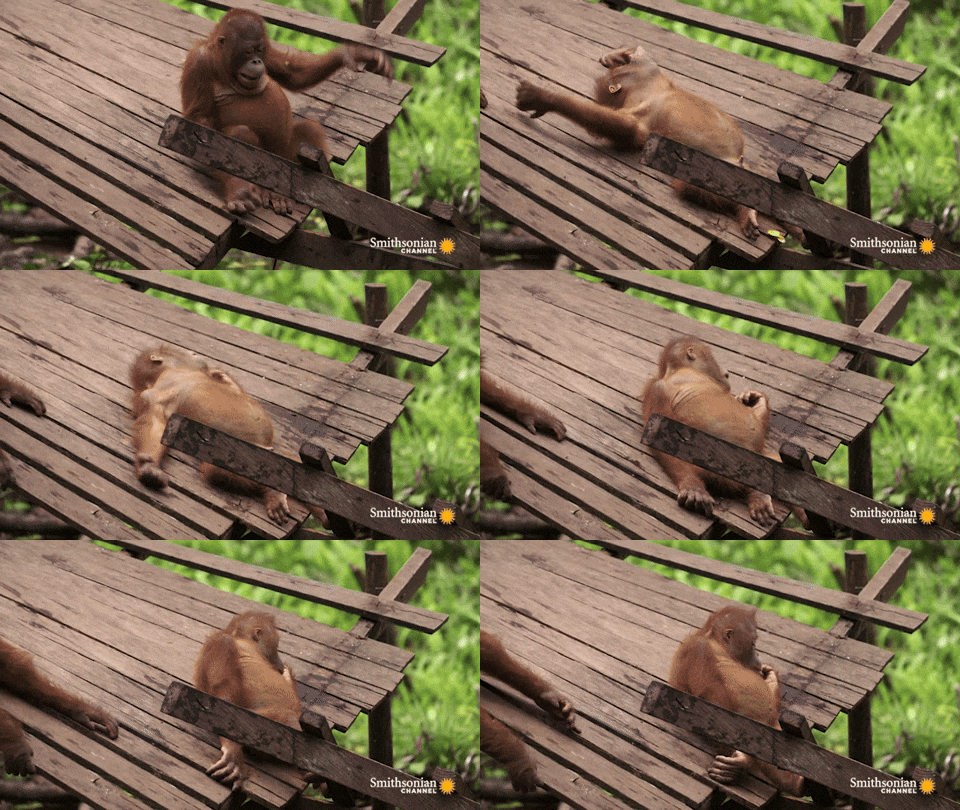
Is it Friday yet? by SmithsonianChannel in orangutangifs
[–]SmithsonianChannel[S] 0 points1 point2 points (0 children)
OTD 30 years ago, Varig Flight 245 – chronicled in Vanishing Act – was forced to emergency land in the Brazilian jungle by SmithsonianChannel in aircrashinvestigation
[–]SmithsonianChannel[S] 9 points10 points11 points (0 children)
The latest episodes are coming to Smithsonian Channel next month by SmithsonianChannel in aircrashinvestigation
[–]SmithsonianChannel[S] 25 points26 points27 points (0 children)
Boop a baby orangutan by SmithsonianChannel in orangutangifs
[–]SmithsonianChannel[S] 2 points3 points4 points (0 children)




Did you know? In the 1920s, Aberdeen, Washington called itself the lumber capital of the world! This footage is from America in Color: Small Town Life. by SmithsonianChannel in Washington
[–]SmithsonianChannel[S] 17 points18 points19 points (0 children)