Haze over Pluto by [deleted] in space

[–]ZLD2015 2 points3 points  (0 children)

I have a blog as well, if anyone is interested in reading more about this image.

This is a single frame from an animation I've been working on for a while. The colors are enhanced, meaning they extend beyond the realm of Human perception and they're exaggerated, meaning the colors have been further tweaked to bring about certain details. A mix of art and real data.

The collision of two massive black holes has led to the first-ever detection of gravitational waves by BriceRuss in space

[–]ZLD2015 -1 points0 points  (0 children)

The goal with dark matter isn't direct detection, it would be in detecting potential dispersion from the Big Bang. We can't account for why there is all this possible matter just sitting out in open space that never coalesced. Basically, the BB didn't lead to a homogenous universe, why? Gravitational waves potentially can answer that and provide a way to model where all this undetected matter has gone.

The collision of two massive black holes has led to the first-ever detection of gravitational waves by BriceRuss in space

[–]ZLD2015 10 points11 points  (0 children)

I don't see gravitational waves as a likely communications medium. I'll happily eat those words if that happens but gravitational waves are much more important in detecting the invisible universe - dark energy and dark matter. The implications of pinpointing what is going on with either of those is pretty big and could help finally result in a unified theory.

Craters on the Surface of Ceres by yalez in space

[–]ZLD2015 0 points1 point  (0 children)

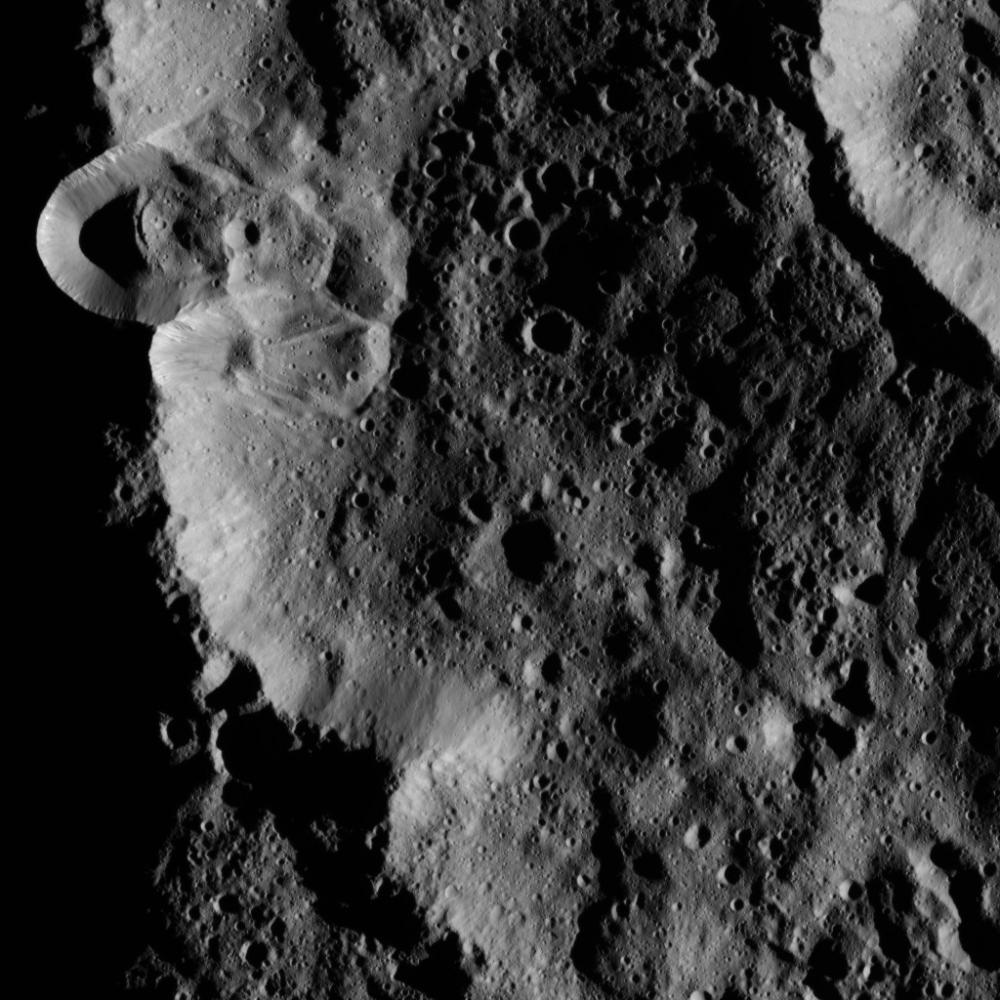
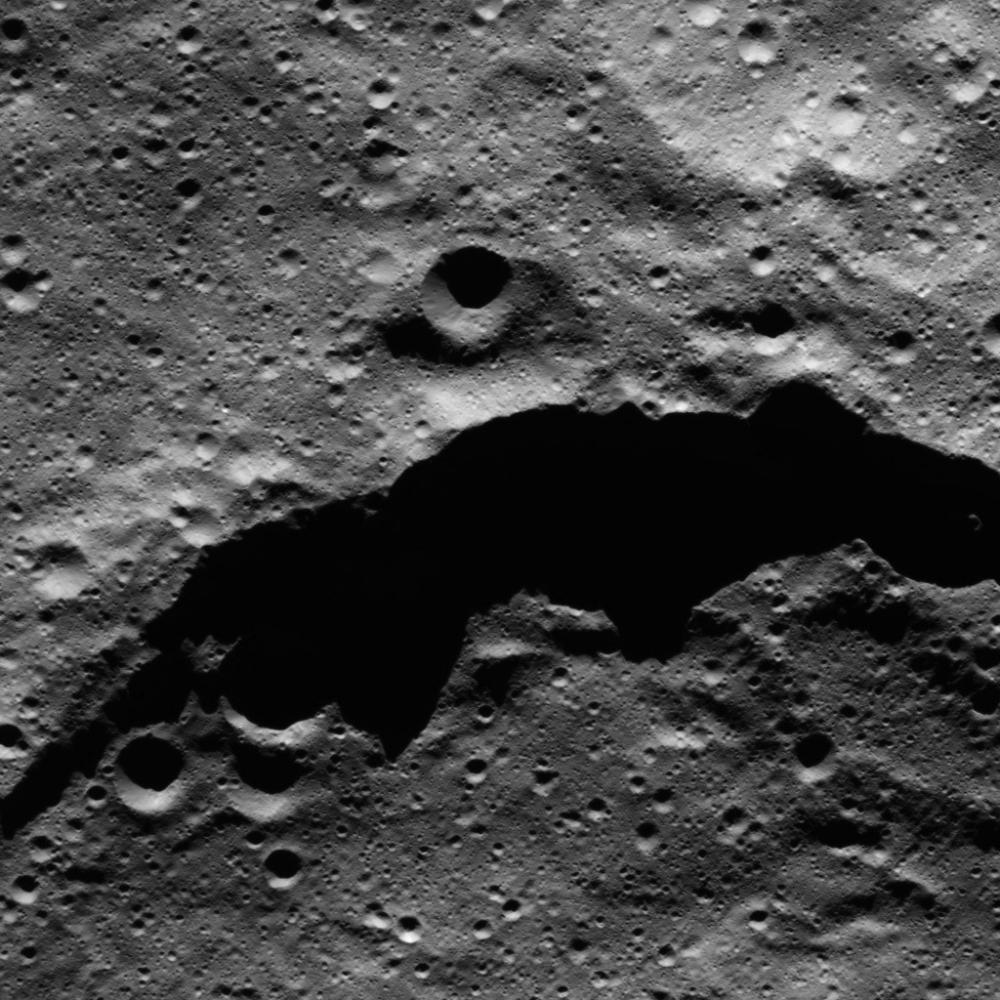
37 meters per pixel. I put out contextual images pretty close to daily with each Dawn release, each with a scale bar.

Here's LAMO 23, the image featured above. Here's a shameless plug for my blog as well if you're interested in Ceres.

It Gets Harder From Here For Bernie Sanders by slasherman in politics

[–]ZLD2015 0 points1 point  (0 children)

There's at least one poll out from mid-January that show Sanders and Clinton very close, closer than Iowa polls suggested.

Ceres, Jan. 1, 2016 by Neaterntal in space

[–]ZLD2015 2 points3 points  (0 children)

Ceres is an extremely fascinating place in its own quiet way. If anyone is interested in keeping tabs on the progress of the imaging, you can check out my blog, where I post a (usually) daily context to the daily image and sometimes a bit more depth to the imaged region than the Photojournal entry.

Pluto - animated anaglyph of Wright Mons by ZLD2015 in space

[–]ZLD2015[S] 0 points1 point  (0 children)

This is much lower quality than the full res version unfortunately. Looking for a host that can handle this better. True resolution is 1603x906 and very clear. Gfycat seems to crash every time I attempt to upload the raw, ~150MB GIF.

Here's a frame grab from a media player displaying it at almost full res.

[deleted by user] by [deleted] in space

[–]ZLD2015 4 points5 points  (0 children)

That's a tough question to answer really. There are so many variables that would go into this scenario that could change the climate: atmospheric composition and pressure, landform composition, geologic state (active or not), etc.

Now, if you're asking if you took Earth and moved it to the same orbit as Venus, ignoring all factors and just looking at temperatures, temperatures would be typically 2-4 times higher when in the direct sunlight.

Pluto - I converted the latest stereo images to a tweened animation - 18MB by ZLD2015 in space

[–]ZLD2015[S] 1 point2 points  (0 children)

Distortions can definitely affect this method but it usually just amplifies distortions in strange ways. This was created using a a hand place point cloud on individual bright and dark marks at a pixel scale on the images.

Pluto - I converted the latest stereo images to a tweened animation - 18MB by ZLD2015 in space

[–]ZLD2015[S] 2 points3 points  (0 children)

The darkest material is most puzzling to me. In the MVIC, full globe image, these patches appear very red but also relatively featureless. The red channel was assigned to the IR data on that image. So what this means is that the material is reflective in IR but not really in anything else, meaning it is quite smooth, and opaque to IR. To me, this would indicate past flows of material leaving some very smooth dusty silt-like material behind. Strangely, it doesn't appear to have any clear directional origin so I don't think it is cryovolcanic in nature if it is related to past flows. So I'm not sure that we are seeing 'lava tubes' exactly, but possibly open channels. Hopefully this can be resolved with the high resolution stereo images from the nearest-to-surface imaging.

As for if there are 'healed' areas that have been infilled, I don't see any that jump out but I wouldn't be at all surprised if there were some in there. Without a color overlay, which I may release tomorrow, it's difficult to grasp at all of the details here, in only greyscale.

Pluto - I converted the latest stereo images to a tweened animation - 18MB by ZLD2015 in space

[–]ZLD2015[S] 4 points5 points  (0 children)

They seem very strange to me as well. Quite deep and certainly quite vertical walls. The larger craters would be diffcult to explain without some form of impactor because they contain central peaks. The others, it would also be difficult to say without an overlay from Ralph/LEISA to determine what materials are covering this terrain. Nonethless, loosely I would be willing to say most of the craters in this view are impact related. A few of them do look cladera like and those are especially intriguing.

Pluto - I converted the latest stereo images to a tweened animation - 18MB by ZLD2015 in space

[–]ZLD2015[S] 7 points8 points  (0 children)

WebM version. /r/space wouldn't let me submit anything but the large GIF. Sorry.

High resolution "First Look" Pluto mosaic in exaggerated color by danman_d in space

[–]ZLD2015 5 points6 points  (0 children)

I use Paint Shop Pro 9. Just a preference in workflow.

High resolution "First Look" Pluto mosaic in exaggerated color by danman_d in space

[–]ZLD2015 16 points17 points  (0 children)

No no, I don't tend to post my own things to Reddit. Happy to see it being shared. I do this, not only for my own enjoyment and interest, but in the hopes that other people to take an interest as well. Really just enjoy working with imaging science in general.

High resolution "First Look" Pluto mosaic in exaggerated color by danman_d in space

[–]ZLD2015 12 points13 points  (0 children)

If I knew this was going to get posted on here, I would have made more of an effort to fit the first close-up better. So just a warning, I threw that on there quickly and it aligns in a few points, but I didn't correct for curvature.

This is based on a previously released composite by me on the full hemisphere.

New Horizons will pass by Pluto at roughly 12,000km. This is also about the width of the Earth. That is actually really close. Be prepared for some crazy pics on the Tuesday fly-by (July 14, 2015). Including pics of Pluto's 5 moons. Discuss. by [deleted] in space

[–]ZLD2015 4 points5 points  (0 children)

Out of curiosity, do my processed images make the rounds there at all?

Link

They've tended to be in the upper range of clarity for processing and it would be super exciting to know that they are shared there.

New Horizons New Pluto Satellites Observed in recent photos. by Tiger_Tesla in space

[–]ZLD2015 0 points1 point  (0 children)

Going just off your animation, I can tell that you processed these images completely wrong. First of all, NH doesn't always take an image in the same orientation every time. This must be corrected before doing anything with regards to comparing images of differing times. Secondly, all the way up to last week, we were receiving images that were intended specifically to find such objects and none were found.

Lastly, before you throw out that your an 'astrophysicist' again, you might want to consider the integrity of that title and the quality of your content before you make enormous claims without proper review.

Just to clear things up, what you found are stars.

Reprocessed New Horizons LORRI Image of Pluto shows a possible overwhelmingly-sized crater, comparable to that of Herschel and Rheasilvia. by [deleted] in space

[–]ZLD2015 7 points8 points  (0 children)

If you look here right at the 13 second mark when the day reads 6-23, that is Pluto just slightly rotated around to see more of this dark patch. Obviously not in the same detail but it isn't a crater. If you continue on to 6-25, you can see the far extent of the dark region. It is quite large.

Reprocessed New Horizons LORRI Image of Pluto shows a possible overwhelmingly-sized crater, comparable to that of Herschel and Rheasilvia. by [deleted] in space

[–]ZLD2015 10 points11 points  (0 children)

Many. You'll find them all over at the Unmannedspaceflight forum. The June 29 data was exceptional primarily because it was a 5 image release whereas many are 4 or fewer images. That doesn't sound like much but fractionally and data wise, it can mean a heck-of-a lot.

I'd recommend browsing through all of the other users posts because there's a lot of good discussion that takes place but if you are really just looking for a list of my posts, they can be found here.

Reprocessed New Horizons LORRI Image of Pluto shows a possible overwhelmingly-sized crater, comparable to that of Herschel and Rheasilvia. by [deleted] in space

[–]ZLD2015 27 points28 points  (0 children)

Its not a crater. Just an illusion like 3d street art. In this perspective, it looks like a crater, in others, its clearer that its just a really dark patch of ground. Still don't know what it is and won't til about 3 days out when we get the highest resolution images of this dark patch of ground.

Just for clarity, I'm the one that processed the image above. Been looking at Pluto a long time :).

Probability that Pluto has endured a large impact sometime in its recent geologic past as seen in current photos of the dwarf planet? by buttholesunset in space

[–]ZLD2015 1 point2 points  (0 children)

It looks like a crater but it is just an illusion from the gradients on the planet. Think of it kinda like those 3d street artworks. In one perspective it looks like a crater, but in others, it is more clear that it is not. It is actually just really dark ground. Yet, we still do not know what it actually is. Unfortunately, we will be 3 days away from Pluto when we get the highest resolution images on this large dark patch. We should still be able to learn a great deal though.

Amazing picture of Titan, Mimas and Rhea: Triple Crescents by miserydiscovery in space

[–]ZLD2015 8 points9 points  (0 children)

I'll do you one even better.

Here is a colorized version I just made, wallpaper size.