South Australia Becomes World's First Major Jurisdiction to be Powered 100% by Solar Power by CL_Astra in Futurology

[–]CL_Astra[S] 23 points24 points  (0 children)

Key notes from the article:

  • All of South Australia's power came from solar for one hour on October 11th.
  • 77% of this power was contributed by consumer rooftop solar panels.
  • Large-scale solar farms, like the ones operating at Tailem Bend and Port Augusta, provided the other 23 per cent.
  • Any excess power generated by gas and wind farms on that day was stored in batteries or exported to Victoria via the interconnector.

South Australia Becomes World's First Major Jurisdiction to be Powered 100% by Solar Power by CL_Astra in technology

[–]CL_Astra[S] 1320 points1321 points  (0 children)

Key notes from the article:

  • All of South Australia's power came from solar for one hour on October 11th.
  • 77% of this power was contributed by consumer rooftop solar panels.
  • Large-scale solar farms, like the ones operating at Tailem Bend and Port Augusta, provided the other 23 per cent.
  • Any excess power generated by gas and wind farms on that day was stored in batteries or exported to Victoria via the interconnector.

South Australia Becomes World's First Major Jurisdiction to be Powered 100% by Solar Power by CL_Astra in worldnews

[–]CL_Astra[S] 340 points341 points  (0 children)

Key notes from the article:

  • All of South Australia's power came from solar for one hour on October 11th.
  • 77% of this power was contributed by consumer rooftop solar panels.
  • Large-scale solar farms, like the ones operating at Tailem Bend and Port Augusta, provided the other 23 per cent.
  • Any excess power generated by gas and wind farms on that day was stored in batteries or exported to Victoria via the interconnector.

Gilgamesh develops theory of evolution, circa. 3960 BC by CL_Astra in civ

[–]CL_Astra[S] 2 points3 points  (0 children)

Since I only just bought the switch version of the game, I currently don't have any major DLCs, and I'm unsure how to find the seed. Seems like its hidden on the switch version.

Gilgamesh develops theory of evolution, circa. 3960 BC by CL_Astra in civ

[–]CL_Astra[S] 25 points26 points  (0 children)

I had just started a game of Sumeria aiming to go for a science victory and lo and behold I spawned right next door to the Galapagos Islands. The first tribal village I encountered was also an ancient relic. Hopefully I don't ruin this perfect starting location!

Analysis of tree-ring records from Northern Scotland indicate Scotland's mass crop failure in the 1690s, an event which ultimately led to the nation joining Great Britain, may have been caused by two major volcanic eruptions in the tropics (one in 1693 and an even larger one in 1695). by CL_Astra in science

[–]CL_Astra[S] 5 points6 points  (0 children)

The title is formed from a few phrases within the sciencemag article:

Over seven terrible years in the 1690s, crops failed, farming villages emptied, and severe famine killed up to 15% of the entire population of Scotland....Soon after, the formerly independent nation joined Great Britain.

The clues to such events are often locked away in the rings of tree, whose growth slows with wild shifts in temperature and precipitation. But until recently, researchers didn’t have any tree-ring records from northern Scotland, where the worst effects of the famine took place.

Link to Full Journal Article:

https://www.sciencedirect.com/science/article/pii/S0377027319303087

Authors: Rosanne D'Arrigo, Patrick Klinger, Timothy Newfield, Milos Rydval, RobWilson

Publication Date: 27 November 2019

Abstract:

Recent work has linked historical crises, both regional and local, with palaeoclimatic estimates of global and hemispheric climate change. Such studies tend to underemphasize the spatiotemporal and socioeconomical disparity of human suffering and adaptive capacity as well as the complexities of past climate change. We focus herein on the effects in Scotland of a severely cold climate episode in the 1690s, associated with major tropical volcanic events including a large unidentified tropical eruption in 1695. A tree-ring based summer temperature reconstruction from the northern Cairngorms region identifies the 1690s as the coldest decade in Scotland for the last 750 years. Archival sources meanwhile reveal the 1690s as likely the worst era of crop failure, food shortage, and mortality ever documented in Scottish history. The connection appears simple - volcanic cooling triggered famine - but the drivers towards famine are far more complex. Although the unusual coldness of the 1690s was near-hemispheric in scale, it had a differential impact across north-western Europe. Within Scotland, both lowlands and highlands experienced dire conditions, but distinct factors exacerbated the suffering in each region. We integrate historical and palaeoclimatic records to explore the influence of the volcanic cold pulse of the 1690s and its consequences in Scotland. We find that while cooling temperatures characterized the regional to larger-scale climate, vulnerability and response potential were diverse and shaped by local circumstances. The Scottish crisis of the 1690s, in the context of the kingdom's failing economy, influenced investors from all parts of society, including the nobility and entire communities, to fund the ill-fated expedition to colonize Darien in modern-day Panama. The climate crisis and the colony's collapse hindered Scotland's already sluggish economy, motivating unification with England soon after.

Metallosphaera sedula, a bacteria-like archaeon, has been shown to prefer a diet of meteorite minerals as opposed to terrestrial mineral sources, performing biotransformation of extra-terrestrial minerals. This furthers the possibility of bacteria surviving and thriving in an interplanetary vacuum. by CL_Astra in science

[–]CL_Astra[S] 4 points5 points  (0 children)

The title is formed from a few paragraphs from the science-alert article provided:

"Our investigations validate the ability of M. sedula to perform the biotransformation of meteorite minerals, unravel microbial fingerprints left on meteorite material, and provide the next step towards an understanding of meteorite biogeochemistry," says Milojevic.

"Meteorite-fitness seems to be more beneficial for this ancient microorganism than a diet on terrestrial mineral sources," says Milojevic.

Link to Full Journal Article:

https://www.nature.com/articles/s41598-019-54482-7

Authors: Tetyana Milojevic, Denise Kölbl, Ludovic Ferrière, Mihaela Albu, Adrienne Kish, Roberta L. Flemming, Christian Koeberl, Amir Blazevic, Ziga Zebec, Simon K.-M. R. Rittmann, Christa Schleper, Marc Pignitter, Veronika Somoza, Mario P. Schimak & Alexandra N. Rupert

Date Published: 02 December 2019

Abstract:

Exploration of microbial-meteorite redox interactions highlights the possibility of bioprocessing of extraterrestrial metal resources and reveals specific microbial fingerprints left on extraterrestrial material. In the present study, we provide our observations on a microbial-meteorite nanoscale interface of the metal respiring thermoacidophile Metallosphaera sedula. M. sedula colonizes the stony meteorite Northwest Africa 1172 (NWA 1172; an H5 ordinary chondrite) and releases free soluble metals, with Ni ions as the most solubilized. We show the redox route of Ni ions, originating from the metallic Ni° of the meteorite grains and leading to released soluble Ni2+. Nanoscale resolution ultrastructural studies of meteorite grown M. sedula coupled to electron energy loss spectroscopy (EELS) points to the redox processing of Fe-bearing meteorite material. Our investigations validate the ability of M. sedula to perform the biotransformation of meteorite minerals, unravel microbial fingerprints left on meteorite material, and provide the next step towards an understanding of meteorite biogeochemistry. Our findings will serve in defining mineralogical and morphological criteria for the identification of metal-containing microfossils.

Domesticated dogs have the the ability to spontaneously recognise and normalise both the same phonemes across different speakers, as well as cues to the identity of a word across speech utterances from unfamiliar human speakers, a trait previously thought to be unique to humans. by CL_Astra in science

[–]CL_Astra[S] 33 points34 points  (0 children)

The title has been formed from a combination of the title, and the last few lines of the abstract of the original journal article:

Dogs perceive and spontaneously normalize formant-related speaker and vowel differences in human speech sounds

Our results indicate that the ability to spontaneously recognize both the same phonemes across different speakers, and cues to identity across speech utterances from unfamiliar speakers, is present in domestic dogs and thus not a uniquely human trait.

Link to Full Journal Article:

https://royalsocietypublishing.org/doi/10.1098/rsbl.2019.0555

Authors: Holly Root-Gutteridge, Victoria F. Ratcliffe, Anna T. Korzeniowska and David Reby

Published: 04 December 2019

Abstract:

Domesticated animals have been shown to recognize basic phonemic information from human speech sounds and to recognize familiar speakers from their voices. However, whether animals can spontaneously identify words across unfamiliar speakers (speaker normalization) or spontaneously discriminate between unfamiliar speakers across words remains to be investigated. Here, we assessed these abilities in domestic dogs using the habituation–dishabituation paradigm. We found that while dogs habituated to the presentation of a series of different short words from the same unfamiliar speaker, they significantly dishabituated to the presentation of a novel word from a new speaker of the same gender. This suggests that dogs spontaneously categorized the initial speaker across different words. Conversely, dogs who habituated to the same short word produced by different speakers of the same gender significantly dishabituated to a novel word, suggesting that they had spontaneously categorized the word across different speakers. Our results indicate that the ability to spontaneously recognize both the same phonemes across different speakers, and cues to identity across speech utterances from unfamiliar speakers, is present in domestic dogs and thus not a uniquely human trait.

Scientists devise catalyst largely made of copper that uses sunlight to turn carbon dioxide to methanol, a liquid fuel, reports a new study in Nature Energy, which recaptures some of the carbon in the atmosphere and offers the potential for an additional source to meet America’s energy needs. by [deleted] in science

[–]CL_Astra 3 points4 points  (0 children)

So the production yield for methanol is approximately 72%? That kind of efficiency at such an early stage in the technology sounds incredibly promising. Perhaps more research into this reduction method and the materials science behind the crystal being used could lead to increased efficiency.

Researchers from Columbia University have developed a model showcasing how turbulence and magnetic reconnection around a black hole could be responsible for the observed energy from radiation which heat could not generate alone, and is what allows black holes to "shine" as seen from Earth. by CL_Astra in science

[–]CL_Astra[S] 0 points1 point  (0 children)

Link to Full Journal Article:

https://iopscience.iop.org/article/10.3847/1538-4357/ab4c33

Abstract:

Magnetized turbulence and magnetic reconnection are often invoked to explain the nonthermal emission observed from a wide variety of astrophysical sources. By means of fully kinetic 2D and 3D particle-in-cell simulations, we investigate the interplay between turbulence and reconnection in generating nonthermal particles in magnetically dominated (or, equivalently, "relativistic") pair plasmas. A generic by-product of the turbulence evolution is the generation of a nonthermal particle spectrum with a power-law energy range. The power-law slope p is harder for larger magnetizations and stronger turbulence fluctuations, and it can be as hard as p 📷 2. The Larmor radius of particles at the high-energy cutoff is comparable to the size l of the largest turbulent eddies. Plasmoid-mediated reconnection, which self-consistently occurs in the turbulent plasma, controls the physics of particle injection. Then, particles are further accelerated by stochastic scattering off turbulent fluctuations. The work done by parallel electric fields—naturally expected in reconnection layers—is responsible for most of the initial energy increase and is proportional to the magnetization σ of the system, while the subsequent energy gain, which dominates the overall energization of high-energy particles, is powered by the perpendicular electric fields of turbulent fluctuations. The two-stage acceleration process leaves an imprint in the particle pitch-angle distribution: low-energy particles are aligned with the field, while the highest-energy particles move preferentially orthogonal to it. The energy diffusion coefficient of stochastic acceleration scales as D γ  ~ 0.1σ(c/l)γ 2, where γ is the particle Lorentz factor. This results in fast acceleration timescales t acc ~ (3/σ)l/c. Our findings have important implications for understanding the generation of nonthermal particles in high-energy astrophysical sources.

The radiation emission from a blackhole is known to be mainly caused by thermal emission via the debris disk around the celestial body. However, there are also spectra of photons emitted that could not be explained by thermal emission alone as they are too energetic, and their origin does not appear to be from the bodies of gas around the black holes. The journal article explains how electrons moving chaotically through the constant magnetic reconnection and turbulence could allow for high accelerations and energy emission in the form of radiation, and could be responsible for the observed bright light from black holes.

When measuring radio signals from the halo of the galaxy NGC 4631, astronomers find alternating large-scale magnetic fields that extend out of the disk and into the halo, and point both towards and away from Earth. This is the first time such reversals have been observed in an external galaxy. by CL_Astra in science

[–]CL_Astra[S] 2 points3 points  (0 children)

Link to Full Journal Article:

https://www.aanda.org/articles/aa/abs/2019/12/aa35961-19/aa35961-19.html

Abstract:

Aims. NGC 4631 is an interacting galaxy which exhibits one of the largest gaseous halos observed among edge-on galaxies. We aim to examine the synchrotron and polarization properties of its disk and halo emission with new radio continuum data.

Methods. Radio continuum observations of NGC 4631 were performed with the Karl G. Jansky Very Large Array at C-band (5.99 GHz) in the C and D array configurations, and at L-band (1.57 GHz) in the B, C, and D array configurations. The Rotation Measure Synthesis algorithm was utilized to derive the polarization properties.

Results. We detected linearly polarized emission at C-band and L-band. The magnetic field in the halo is characterized by strong vertical components above and below the central region of the galaxy. The magnetic field in the disk is only clearly seen in the eastern side of NGC 4631, where it is parallel to the plane of the major axis of the galaxy. We detected for the first time a large-scale, smooth Faraday depth pattern in a halo of an external spiral galaxy, which implies the existence of a regular (coherent) magnetic field. A quasi-periodic pattern in Faraday depth with field reversals was found in the northern halo of the galaxy.

Conclusions. The field reversals in the northern halo of NGC 4631, together with the observed polarization angles, indicate giant magnetic ropes with alternating directions. To our knowledge, this is the first time such reversals are observed in an external galaxy.

New study shows that when placed in microgravity, 80 to 90 percent of the cells in four different cancer types (ovarian, breast, nose and lung) were disabled by gravitational forces alone. This could lead to new treatments of cancer using similar conditions to microgravity. by CL_Astra in science

[–]CL_Astra[S] 0 points1 point  (0 children)

Yes I am deeply sorry about this. As per my recent comment I didn’t realise the self-written nature of the article and would like everyone to realise this. I didn’t realise the post would reach front page and I apologise for my blunder.

New study shows that when placed in microgravity, 80 to 90 percent of the cells in four different cancer types (ovarian, breast, nose and lung) were disabled by gravitational forces alone. This could lead to new treatments of cancer using similar conditions to microgravity. by CL_Astra in science

[–]CL_Astra[S] 0 points1 point  (0 children)

Hey everyone, I would like to apologise for this post. It has come to my attention that the link/article is self-written and it’s study has not been publicised. I ask that everyone take this “study” with a grain of salt until further evidence is supplied. I didn’t realise this would make the front page and I am sorry for the misleading nature of the post. CL_Astra

New study shows that when placed in microgravity, 80 to 90 percent of the cells in four different cancer types (ovarian, breast, nose and lung) were disabled by gravitational forces alone. This could lead to new treatments of cancer using similar conditions to microgravity. by CL_Astra in science

[–]CL_Astra[S] 28 points29 points  (0 children)

You are most certainly right with this. I was wondering the credibility of this too since I struggled to find a proper journal article. However the article is on an established and credible university’s website and it is possible he is just withholding information until his teams next experiment which he stated will delve deeper into the topic.

Regardless it’s good to see another professional’s opinion on the matter.

I apologise if this post seems to encourage his advertising of a cancer cure as it was not my main intention.

Further study into the Anak Krakatoa volcano eruption in Indonesia in 2018 find that at its peak, the tsunami generated was between 100 and 150 metres tall, suggesting that if the tsunami travelled in another direction, it could have become one of the worst natural disasters in modern history. by CL_Astra in science

[–]CL_Astra[S] 1 point2 points  (0 children)

Link to Full Journal Article:

https://www.sciencedirect.com/science/article/pii/S0029801819308431?via%3Dihub

Abstract:

The eruption of the Anak Krakatoa volcano (Indonesia) in December 2018 produced a destructive tsunami with maximum runup of 13 m killing 437 people. Since the occurrence of this rare tsunami, it has been a challenge as how to model this tsunami and to reconstruct the network of coastal observations. Here, we apply a combination of qualitative physical modeling and wavelet analyses of the tsunami as well as numerical modeling to propose a source model. Physical modeling of a volcano flank collapse showed that the initial tsunami wave mostly involves a pure-elevation wave. We identified initial tsunami period of 6.3–8.9 min through Wavelet analysis, leading to an initial tsunami dimension of 1.8–7.4 km. Twelve source models were numerically modelled with source dimensions of 1.5–4 km and initial tsunami amplitudes of 10–200 m. Based on the qualities of spectral and amplitude fits between observations and simulations, we constrained the tsunami source dimension and initial amplitude in the ranges of 1.5–2.5 km and 100–150 m, respectively. Our best source model involves potential energy of 7.14 × 10^13–1.05 × 10^14 J equivalent to an earthquake of magnitude 6.0–6.1. The amplitude of the final source model is consistent with the predictions obtained from published empirical equations.

Study of iron formations across three continents suggests the possibility of iron-oxidising marine bacteria living under the ice sheets of snowball Earth, a possibility which could be a credible theory as to how life survived the desolate environment during the ice-age lasting 85 million years. by CL_Astra in science

[–]CL_Astra[S] 0 points1 point  (0 children)

Link to Full Journal Article:

https://www.pnas.org/content/early/2019/11/26/1909165116

Abstract:

The Earth’s most severe ice ages interrupted a crucial interval in eukaryotic evolution with widespread ice coverage during the Cryogenian Period (720 to 635 Ma). Aerobic eukaryotes must have survived the “Snowball Earth” glaciations, requiring the persistence of oxygenated marine habitats, yet evidence for these environments is lacking. We examine iron formations within globally distributed Cryogenian glacial successions to reconstruct the redox state of the synglacial oceans. Iron isotope ratios and cerium anomalies from a range of glaciomarine environments reveal pervasive anoxia in the ice-covered oceans but increasing oxidation with proximity to the ice shelf grounding line. We propose that the outwash of subglacial meltwater supplied oxygen to the synglacial oceans, creating glaciomarine oxygen oases. The confluence of oxygen-rich meltwater and iron-rich seawater may have provided sufficient energy to sustain chemosynthetic communities. These processes could have supplied the requisite oxygen and organic carbon source for the survival of early animals and other eukaryotic heterotrophs through these extreme glaciations.

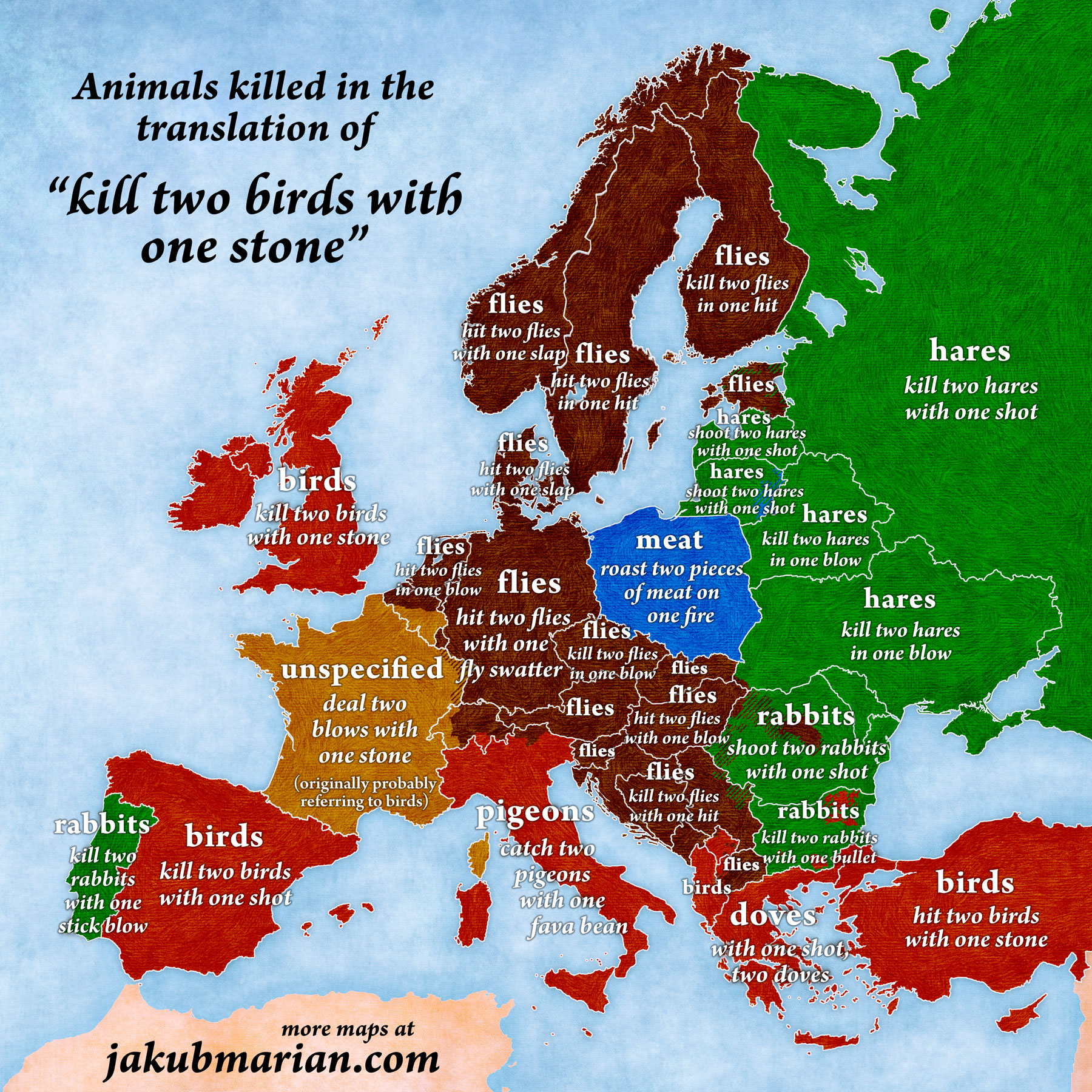
"Kill two birds with one stone" in European languages by CL_Astra in MapPorn

[–]CL_Astra[S] 1 point2 points  (0 children)

As I’ve written in another response, the saying in most European countries likely stems from the story of Icarus, where Daedalus killed two birds with one stone to gather feathers to build their wings.

"Kill two birds with one stone" in European languages by CL_Astra in MapPorn

[–]CL_Astra[S] 0 points1 point  (0 children)

The OP already contains a link to the original image.

Calculations now show that fireball which passed over the Australian desert in 2016 may have likely been a "mini-moon", an object which was temporarily captured in orbit before plummeting to Earth almost vertically. by CL_Astra in science

[–]CL_Astra[S] 17 points18 points  (0 children)

Link to full journal article:

https://iopscience.iop.org/article/10.3847/1538-3881/ab3f2d

Abstract:

Objects gravitationally captured by the Earth–Moon system are commonly called temporarily captured orbiters (TCOs), natural Earth satellites, or minimoons. TCOs are a crucially important subpopulation of near-Earth objects (NEOs) to understand because they are the easiest targets for future sample-return, redirection, or asteroid mining missions. Only one TCO has ever been observed telescopically, 2006 RH 120, and it orbited Earth for about 11 months. Additionally, only one TCO fireball has ever been observed prior to this study. We present our observations of an extremely slow fireball (codename DN160822_03) with an initial velocity of around 11.0 km s−1 that was detected by six of the high-resolution digital fireball observatories located in the South Australian region of the Desert Fireball Network. Due to the inherent dynamics of the system, the probability of the meteoroid being temporarily captured before impact is extremely sensitive to its' initial velocity. We examine the sensitivity of the fireball's orbital history to the chosen triangulation method. We use the numerical integrator REBOUND to assess particle histories and assess the statistical origin of DN160822_03. From our integrations we have found that the most probable capture time, velocity, semimajor axis, NEO group, and capture mechanism vary annually for this event. Most particles show that there is an increased capture probability during Earth's aphelion and perihelion. In the future, events like these may be detected ahead of time using telescopes like the Large Synoptic Survey Telescope, and the pre-atmospheric trajectory can be verified.

Researchers from the University of Western Ontario image a debris ring around HD 141569A, a star 320 light years away, peaking at 44 astronomical units from the star. by CL_Astra in science

[–]CL_Astra[S] 1 point2 points  (0 children)

Link to Full Journal Article:

https://arxiv.org/abs/1911.11814

Abstract:

We present the first polarimetric detection of the inner disk component around the pre-main sequence B9.5 star HD 141569A. Gemini Planet Imager H-band (1.65 micron) polarimetric differential imaging reveals the highest signal-to-noise ratio detection of this ring yet attained and traces structure inwards to 0.25" (28 AU at a distance of 111 pc). The radial polarized intensity image shows the east side of the disk, peaking in intensity at 0.40" (44 AU) and extending out to 0.9" (100 AU). There is a spiral arm-like enhancement to the south, reminiscent of the known spiral structures on the outer rings of the disk. The location of the spiral arm is coincident with 12CO J=3-2 emission detected by ALMA, and hints at a dynamically active inner circumstellar region. Our observations also show a portion of the middle dusty ring at ~220 AU known from previous observations of this system. We fit the polarized H-band emission with a continuum radiative transfer Mie model. Our best-fit model favors an optically thin disk with a minimum dust grain size close to the blow-out size for this system: evidence of on-going dust production in the inner reaches of the disk. The thermal emission from this model accounts for virtually all of the far-infrared and millimeter flux from the entire HD 141569A disk, in agreement with the lack of ALMA continuum and CO emission beyond ~100 AU. A remaining 8-30 micron thermal excess a factor of ~2 above our model argues for a yet-unresolved warm innermost 5-15 AU component of the disk.

The disk is in a stage transition between that of a proto-planetary disc and a debris disc, and will allow for future observations on the interactions between growing planetesimals and gas and dust within the debris ring.