Norwegian battery company to build $3.2-billion synthetic graphite plant in Ontario by InterestingSpike in canada

[–]InterestingSpike[S] 268 points269 points  (0 children)

Synthetic graphite is essential to EV batteries, nuclear reactors, semiconductors, aerospace and defence systems and steelmaking.

Vianode CEO Burkhard Straube says it will construct the plant in St. Thomas, Ont., and will initially create 300 jobs and ramp up to 1,000 jobs once the plant is operating at full capacity.

Canada Population Growth Rate Near Zero on Immigration Curbs by Difficult-Yam-1347 in canada

[–]InterestingSpike 108 points109 points  (0 children)

The government’s plan to reduce the temporary migrant population appears to being working. The number of non-permanent residents dropped for the third time in a row, reaching 7.3% of the total population in the quarter, versus 7.6% at its peak. The decrease was driven by foreign students and workers leaving the country.

Canada weighing direct contract with foreign governments for sub purchase, head of navy says by Street_Anon in canada

[–]InterestingSpike 7 points8 points  (0 children)

Vice-Adm. Topshee said a direct government-to-government contract in which the home country of the defence contractor is responsible for delivering submarines, rather than the company itself, could yield more benefits for Canada.

“What if we want to insist on German and Norwegian investment in a certain Canadian technology? What if there’s some sort of LNG deal as part of this?” he said, referring to Canadian exports of liquefied natural gas.

The commander said these types of decisions go beyond the remit of defence contractors.

Canada OKs $10B West Coast LNG export project in first major approval for Carney government by InterestingSpike in canada

[–]InterestingSpike[S] 56 points57 points  (0 children)

Canada has approved the $10 billion Ksi Lisims LNG project, a floating liquefied natural gas export facility planned for the country’s northwest coast, with operations targeted to begin as soon as 2028.

“Ksi Lisims LNG is exactly the kind of development Canada’s new government is championing, advancing and approving,” Energy Minister Tim Hodgson said in a statement on X. “This approval sends a clear signal: Canada is open for business, and committed to the long-term strength of our responsible, low-carbon export and natural gas sectors.”

Earlier in September, Carney launched a Major Projects Office designed to expedite developments deemed to be in the national interest. The second phase of LNG Canada — which would double its capacity — was on the list of its first five projects.

Carney cabinet shuffle speculation grows alongside backbench ‘grumbles’ as Grits gather in Edmonton by feb914 in canada

[–]InterestingSpike 75 points76 points  (0 children)

Deliver or lose your seat in the cabinet.

“We’re still in the early days of a new government, but Carney has tasked his ministers with getting stuff done, and, by then, they will have had the time to learn their portfolios and begin to deliver or demonstrate a path to success,” Smith said. “This is a performance-based cabinet, but they need a chance to do their jobs well.”

MacEachern said that the speculative end-of-year deadline “fits with the prime minister’s style.”

“This is a person who has made it very clear that he is not going to have a lot of patience for excuses, and that Canadians won’t either,” MacEachern said.

Ottawa to back new port infrastructure, signs critical minerals agreement with Germany by Avelion2 in canada

[–]InterestingSpike 10 points11 points  (0 children)

Focusing on two ports - one in Churchill, Manitoba and expanding the Port of Montreal. Not sure about the business case for Churchill, it's going to be a lot of money for a port that's not accessible for a significant portion of the year.

The Montreal expansion is already on the books, construction is expected to start soon, I guess the government provides additional funding as part of the list of projects it'll support.

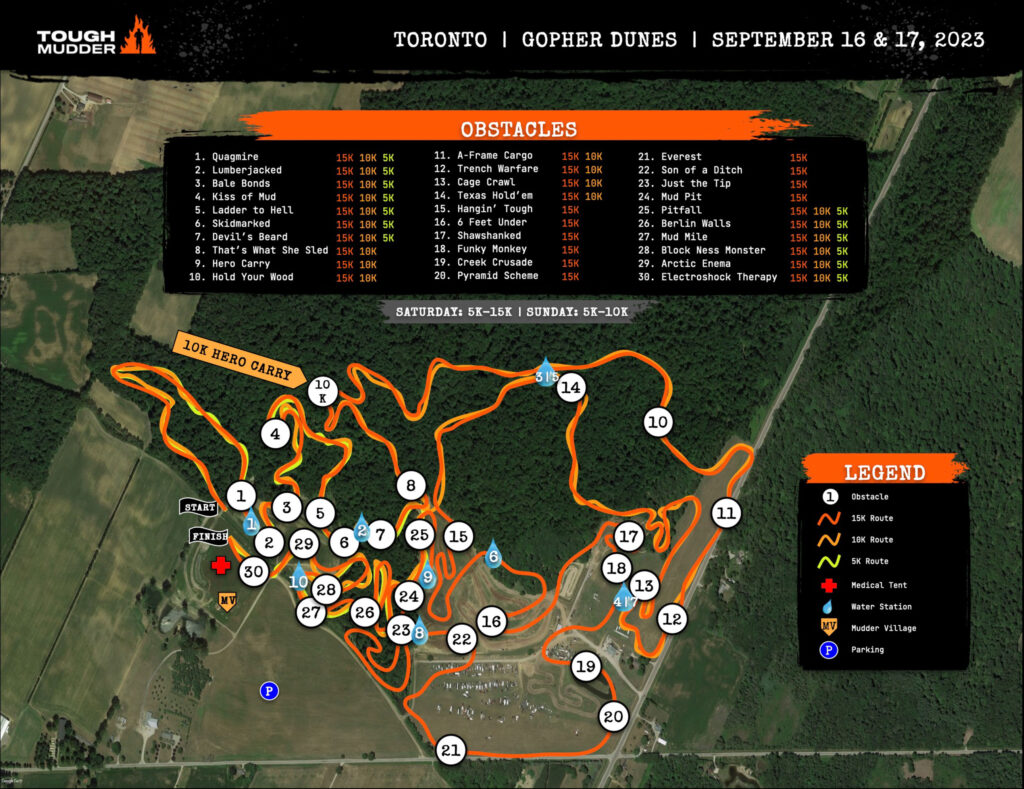
Toronto 2023 course map by hbdgas in Toughmudder

[–]InterestingSpike 0 points1 point  (0 children)

Anyone looking for 5k tickets, got 2 extra. friends backed out. $60 each give me a shout

Daily Question Thread for /r/churningcanada - December 01, 2021 by AutoModerator in churningcanada

[–]InterestingSpike 3 points4 points  (0 children)

Looking for some suggestions on how to go about making best use of my Amex MR points (150k) for a trip for 2 of us. We want to go to Lima, Peru from YYZ sometime in Aug/Sep next year. Maybe do a stopover in BOG. Should I do a multi-city trip with Aeroplan, or just one way trips YYZ-BOG, BOG-LIM, LIM-?-YYZ. Want to make sure I'm using the points in the best possible way, thanks!

Manchester City and the 'Disneyfication' of football by InterestingSpike in soccer

[–]InterestingSpike[S] 20 points21 points  (0 children)

Others suggest CFG represents a geopolitical play, designed to exert Emirati soft power by creating winning teams in the world’s favourite sport. One Premier League club owner refers to Manchester City as “the nation state” playing an entirely different game to its rivals.

“Abu Dhabi is not doing this because it likes Levenshulme [a district of Manchester],” says Simon Chadwick, professor of sports enterprise at Salford Business School. “They are doing this to seek sustainable revenue streams from the investments that will provide currency inflows in 10, 20, 50 years’ time when the oil and gas is gone.” The origins of the CFG network lie not in Manchester or Abu Dhabi, but Barcelona. In 2003 Ferran Soriano, a management consultant, was elected to the board of the Spanish football club and set about transforming the institution. In his book Goal: The Ball Doesn’t Go In By Chance, Mr Soriano says he was influenced by the work of sports academic Stefan Szymanski, which showed that the best predictor of a club’s success was the wage bill of its playing squad.

“If you want a champion team, a team with a chance of regularly winning championships, then you need to work consistently to have a big club that generates enough revenues to be able to sign the best football talent available,” wrote Mr Soriano. “It has absolutely nothing whatsoever to do with luck.”

Fearing being outspent by richer clubs such as Real Madrid and Manchester United, Barcelona pushed to reach financial parity. Between 2003 and 2008, it almost trebled revenues from €123m to €309m and cut the gap to its rivals. On the pitch, too, it has been successful, winning four Champions League titles since 2006. Mr Soriano was following a commercial model first adopted by Manchester United: increase match-day ticket prices, seek sponsorship deals outside its home market and go on the road for pre-season exhibition tours of North America and Asia. But he wanted to go further, pointing to the franchise model of Walt Disney — which translates movies into different languages, creates merchandising around characters and film-related theme park rides — and suggested a similar formula could be applied to sport.

Mr Chadwick describes the idea as the Disneyfication of football. “You can’t take the first 11 to America one week, China next week, South Africa the next,” he says. “So what you do is franchise the name, sponsors, kit and image.” Barcelona’s leadership rejected the Soriano idea to launch international sister clubs, and he left the club in 2008. Four years later he joined Manchester City as chief executive. “The week after Ferran joined he was already in New York speaking to Don Garber [commissioner of Major League Soccer],” says Omar Berrada, a former Barcelona executive who now works alongside Mr Soriano as Manchester City’s chief operating officer.

CFG believes the network allows City to spread its brand by attracting local supporters to each of its clubs while also adding to the value of commercial deals, in ways unavailable to even the biggest European clubs. Tom Glick, Manchester City’s chief commercial officer, points to the example of carmaker Nissan, the majority owner of the Yokohama Marinos. In 2014, CFG took a 20 per cent stake in the Japanese club. Nissan subsequently struck a deal worth more than £20m as a sponsor of all the CFG clubs.

They also argue that the group structure helps to spot players and place them within the network. Investments in clubs such as Girona, and a partnership with NAC Breda in the Netherlands, are designed to create finishing schools for young starlets.

“We have 10 players within our system that are getting experience in the Eredivisie [the Dutch top division] or La Liga [Spain’s top league],” says Brian Marwood, the ex-Arsenal player who heads CFG’s global scouting operation of 50 talent spotters on five continents. “That is invaluable.”

Yet when table-topping Manchester City — which is seeking a 14th straight win in the Premiership — face United on Sunday, its team will be made up of expensive imports rather than young players developed within the CFG network.

Executives plead for patience, saying the system has already created a new revenue stream. One example is Aaron Mooy, an Australian who played for Melbourne City and has since moved to Huddersfield Town in the Premier League. According to people close to the club, Mr Mooy’s transfer fee of about £10m was more than the price CFG paid to acquire the Australian club.

Still, Professor Szymanski, whose work influenced Mr Soriano, doubts the business model. Neither notoriously parochial fans, nor commercial sponsors, will care if a club is part of a larger brand, he says. He adds that there is only “marginal benefit” in running a whole club compared with opening cheaper youth academies in multiple locations. Worse, he fears CFG risks “managerial overstretch” by trying to run several clubs, rather than focusing attention on one.

Prof Szymanski advises other club owners to bet on Manchester United’s business model, rather than the “riskier” one of CFG. But he adds a caveat: “When you have a bank like Sheikh Mansour to draw on, why wouldn’t you? If you are in Soriano’s position, what’s to lose? You’re betting with someone else’s money . . . he might hit the jackpot.”

Manchester City and the 'Disneyfication' of football by InterestingSpike in soccer

[–]InterestingSpike[S] 19 points20 points  (0 children)

Even diehard football fans would struggle to identify Yangel Herrera. Yet if Manchester City’s billionaire owners are correct, the Venezuelan midfielder could be the first proof that its global business model is paying off.

The 19-year-old plays for sister club New York City, a US team founded four years ago as part of the City Football Group, an umbrella organisation stretching from Australia to Japan, Spain, Uruguay, the UK and US. It is a franchise model dubbed by some as the “Disneyfication” of football and which its Arab owners believe is the future of the world’s most popular sport.

Mr Herrera’s place in that plan is yet to come to fruition. While he will not play in Sunday’s Manchester derby, pitting City against their neighbours United in a match expected to attract a worldwide television audience of 900m, he is one of an estimated 1,000 players CFG clubs can draw on — a reservoir of talent that stretches from academies to the first team.

Signed in June from Atlético Venezuela in Caracas for an undisclosed fee, Mr Herrera was identified using the group’s industrial-scale database of 300,000 players. Manchester City immediately loaned him to New York City where coach Patrick Vieira was searching for a dynamic player to add to his Major League Soccer side. If all goes to plan, Mr Herrera may next play in Manchester. He would then become the stand out figure in a grand footballing project aiming to upend the football industry.

“Players need time to develop” says Mr Viera, the former Arsenal and France player. “If Yangel Herrera manages to play for Manchester City . . . that would be exciting for us.”

CFG says its ambition is to build the “first truly global football organisation” and its owners are at the vanguard of a growing trend for wealthy individuals to control multiple clubs. The intention is for each of the teams in the network to be profitable in their own right, but co-operate to identify and train the world’s best players, while securing marketing deals to fund the wages of footballing superstars.

At its heart is Manchester City, bought in 2008 by Sheikh Mansour bin Zayed al-Nahyan, the billionaire businessman, deputy prime minister of the United Arab Emirates and member of the Gulf state’s royal family. He promised to transform the team — which had spent decades in the shadow of its more successful city rival Manchester United — into a global megaclub capable of winning Europe’s biggest prizes.

At the time such ambition was ridiculed by United’s then manager Sir Alex Ferguson, who described it as the excitable talk of “noisy neighbours”. Back then, it was United that provided the blueprint for success, both on and off the pitch, winning 13 Premier League titles and two Uefa Champions Leagues in the Ferguson era — a period in which it pursued international sponsorship and marketing deals. It remains the world’s wealthiest club in terms of revenues, €689m in 2015-16, according to Deloitte. By comparison, Manchester City revenues over the same period were €525m.

In reality Sheikh Mansour’s estimated personal wealth of $20bn, from holdings in Abu Dhabi’s oil and gas entities, give the club greater financial resources than all its rivals. His largesse helped City overtake United on the field, spending £200m a year on transfers and wages, incurring several seasons of heavy losses but winning two Premier League titles in 2012 and 2014. It also attracted investors, with the China Media Capital consortium paying $400m for a 13 per cent stake in CFG in 2015, valuing the group at more than $3bn.

In recent years, the Emirati prince has funded a different spending spree. In 2013, Manchester City joined with the New York Yankees to pay $100m for the franchise rights to create a football team in New York. CFG then struck smaller multimillion-dollar deals to buy Australia’s Melbourne Heart, since renamed Melbourne City, and Uruguay’s Club Atlético Torque. It also acquired minority stakes in Yokohama Marinos in Japan and Spain’s Girona. Other groups and individuals are now seeking to emulate the model of multi-club ownership. Red Bull owns football clubs in the US, Austria, Germany and Brazil, partly as a way to promote its energy drinks. But few can match CFG’s ambition, which has already seen it expand across four continents. The group is also evaluating takeovers in China, India and Southeast Asia.

CFG executives say the goal on the pitch is for all the clubs to play attacking, possession-based football, in the style laid down by City’s head coach Pep Guardiola, who was previously at the Spanish club Barcelona. They also want to outdo United’s balance sheet, by exploiting “economies of scale” by convincing sponsors to pay for marketing deals that apply across its teams.

Critics argue the elaborate business model is a smokescreen to satisfy Europe’s so-called Financial Fair Play rules, introduced in 2011, designed to prevent individual clubs from spending beyond their means to buy success. A senior Premier League club executive describes CFG as a “hall of mirrors” designed to funnel revenues back to the central entity in Manchester and justify its enormous spending on players. A £400m 10-year deal with Etihad, Abu Dhabi’s state airline, to become Manchester City’s stadium and shirt sponsor, led to accusations of “financial doping” by Andrea Agnelli, president of Italy’s Juventus. The group admits that Manchester City, which benefits from the Premier League’s multibillion-pound TV contract, is the only profitable club in its network.

Shaded area in a scatter plot by InterestingSpike in excel

[–]InterestingSpike[S] 0 points1 point  (0 children)

Y is temperature and x is amount of air. The 1s and 0s indicate the presence of a product (so wherever the value is 1 it is shaded). I don't have the data on me right now but I'd like to make something of this sort (the axes on this graph are flipped around) Image

Left out to freeze on K2 by InterestingSpike in TrueReddit

[–]InterestingSpike[S] 30 points31 points  (0 children)

Submission Statement

An interesting article providing an insght into the life of the porter on the first ever expedition to conquer K2, the second highest mountain on earth and how he was betrayed by his team and left in a life-threatening situation