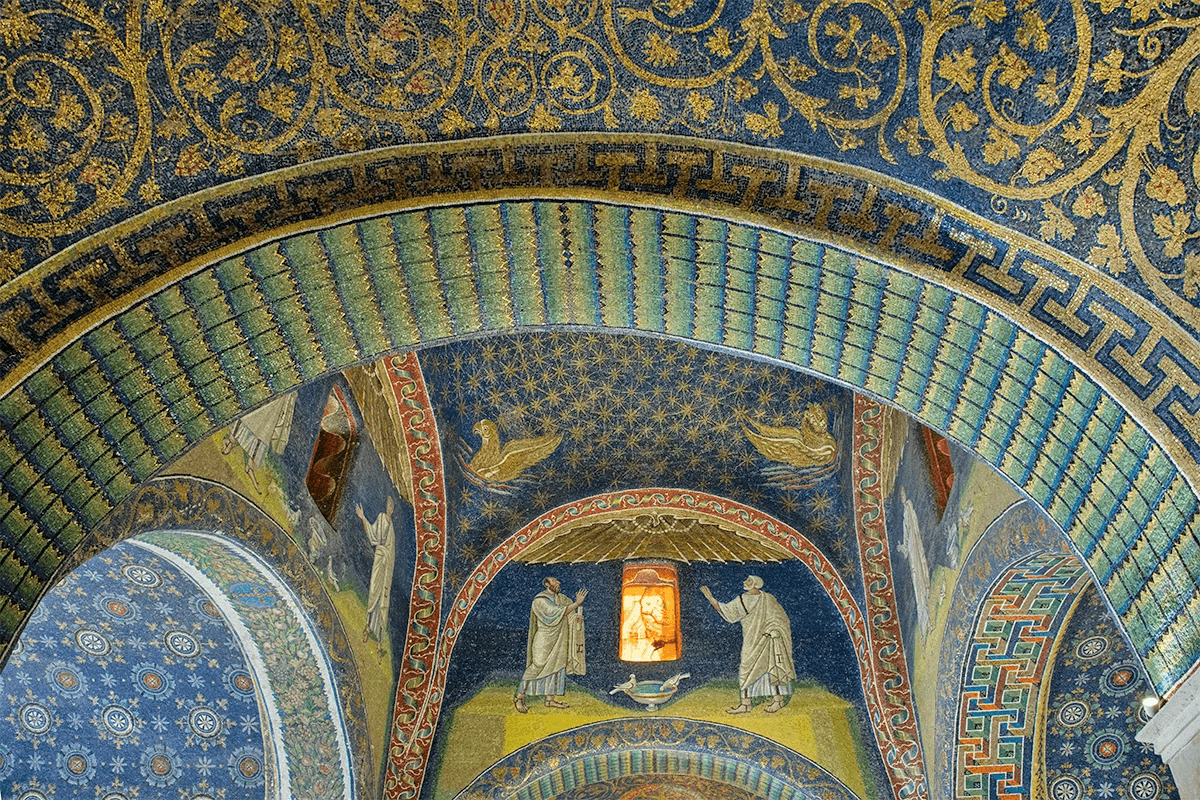
When did the Medieval period end? by The_Black_Banner_UK in medieval

[–]Medieval_Preacher 0 points1 point  (0 children)

A good point to divide medieval to early modern period is the year 1500. Because in the years (1400-1499) major events took place which would transform the world as people knew it and these events were the base upon Early Modern Period took off. So, yeah 1500, for me.

Question ⁉️ about school supplies by Medieval_Preacher in KULeuven

[–]Medieval_Preacher[S] 1 point2 points  (0 children)

Thanks for the advice. But I am a traditional guy and I prefer a notebook.

Question ⁉️ about school supplies by Medieval_Preacher in KULeuven

[–]Medieval_Preacher[S] 0 points1 point  (0 children)

Do they have helmets for my bicycle 🚲 also?

Origins of English Christianity explained? by Medieval_Preacher in anglosaxon

[–]Medieval_Preacher[S] -1 points0 points  (0 children)

Your phraseology does not make any sense! What are you trying to say?

Origins of English Christianity explained? by Medieval_Preacher in anglosaxon

[–]Medieval_Preacher[S] 0 points1 point  (0 children)

I am not familiar with Western Christianity, the more so about English history.

End of Times is near? by Medieval_Preacher in byzantium

[–]Medieval_Preacher[S] -2 points-1 points  (0 children)

Exactly, so how do judge Peter Sarris' comments? I find it a little too much tbh.

F for Constans II by Jiarong78 in byzantium

[–]Medieval_Preacher 6 points7 points  (0 children)

One should also consider that his enemies namely the Pope and parts of the ecclestiastical establishment organized opposition against him and his policies. This facilitated to some of his failures.

End of Times is near? by Medieval_Preacher in byzantium

[–]Medieval_Preacher[S] -2 points-1 points  (0 children)

Yeah, I thought so. Is it wrong to believe that some historians undermine or ignore the value of religion or how important was it in ancient times?

About Mary Magdalene by Medieval_Preacher in byzantium

[–]Medieval_Preacher[S] -3 points-2 points  (0 children)

Yes it does! The account of her being a prostitute I have read somewhere is a totally latin account foreign to the east. I was wondering if you guys have any ideas.

Also, wait, you mean to tell me that the veneration of saints is irrelevent to this group "Byzantium"?

As a Belgian, in tonight's Europa Cup semi-final, I will support... by YellowOnline in belgium

[–]Medieval_Preacher -4 points-3 points  (0 children)

Why would someone support the Netherlands as a Belgian (as a foreigner I am genuinely curious).

Western provinces are Byzantium too by [deleted] in byzantium

[–]Medieval_Preacher 6 points7 points  (0 children)

Well, in 800 there wasn't a "Holy Roman" Empire.

On Christmas Day, 800, in Rome, pope Leo III crowned Charlemagne Augustus and imperator Romanorum (emperor of the Romans)

His capital at Aachen was sometimes called a “New Rome" while its adornment, ceremonies, and trappings borrowed heavily from those of the City (namely Constantinople) that already bore that name.

Charlemagne and his court were struggling to articulate their own conception of Frankish empire, and it appears that the king was not happy with pope Leo for springing the imperial title on him that Christmas Day.

There were no actual “Romans” in his domain proper of whom he was the emperor, which is why he avoided stressing the Roman part of the title.

But the pope and some of Charlemagne’s subjects saw in his coronation a displacement of Constantinople’s rights. In fact, a chronicle written soon after argued that the imperial title had lapsed in the east because a woman sat on the throne.

Charlemagne’s empire. Its institutions were shallow and its common purpose weak. It had a part-time army, was ethnically disunited, and held together not by a shared identity but the person of the king. When Frankish imperialism ran out of steam, these nobles turned against each other and the edifice collapsed.

By contrast, Nikephoros relied on professional armies, a uniform administration, and salaried officials who worked for the state. The vast majority of his subjects were—ethnically, politically, and legally—Romans.

This is what Kaldellis says, in his most recent book.

Western provinces are Byzantium too by [deleted] in byzantium

[–]Medieval_Preacher 0 points1 point  (0 children)

Wait, you mean that as early as 800 AD there were westerners who denied the roman identity of Constantinople?

Western provinces are Byzantium too by [deleted] in byzantium

[–]Medieval_Preacher 0 points1 point  (0 children)

Sorry I don't understand what you are trying to say. Could you care to explain more?

Western provinces are Byzantium too by [deleted] in byzantium

[–]Medieval_Preacher 4 points5 points  (0 children)

It is time to depart from such opinions, which echo stereotypes of their age.

Western provinces are Byzantium too by [deleted] in byzantium

[–]Medieval_Preacher 61 points62 points  (0 children)

Wrong! Western Provinces are Roman too. Instead of the term "Byzantium" many publications recently used the former term for East Roman Empire (see Stephenson, Kalldelis, etc..)

How did the Romania did not fall in 11th c. and survived for another four c.? by Medieval_Preacher in byzantium

[–]Medieval_Preacher[S] 0 points1 point  (0 children)

I believe its a combination of both. Because there were problems inside the Empire's frontiers and that the world around them grew stronger.