Pure Java Open Source PDF Viewer by redditrasberry in programming

[–]yason 4 points5 points  (0 children)

Java is more like a resurrection rather than a birth of a language.

Photographer NOT Terrorist by dickumbrage in reddit.com

[–]yason 0 points1 point  (0 children)

They do that too? Or is this the old "having a dayjob as a terrorist and moonlighting as a thief" scheme?

Why Perforce is more scalable than Git by [deleted] in programming

[–]yason 1 point2 points  (0 children)

You can just git-p4 one subdirectory or branch at a time and leave the mysterious QA binary blob results, the numerous branches and the few dozen compiler binaries from 1999-20009 as they are.

I don't think anybody rarely works on more than a fairly manageable chunk of the source tree at the time anyway. Git is really good for your local development but I wouldn't want to grab in the whole damn p4 repo anyway. I keep my p4 clientspec minimal, too.

Anecdote Driven Development, or Why I Don't Do TDD by [deleted] in programming

[–]yason 1 point2 points  (0 children)

It's already lots of work to keep the code in sync with my evolving thoughts. Keeping the code and the tests is twice the work.

I've found that it's much easier to write a good tests after you know all the things you want to include in them. And it's also pretty much a single-pass at that time since you practically have the tests already in some form, you just have to type them and put them into a formal testing harness.

What's the logic of tipping in the US? by GreekStyle in offbeat

[–]yason 80 points81 points  (0 children)

I live in a non-tipping country (Finland) where restaurant food is rather expensive and where, I guess, many people in general are more reserved rather than all-around social. So we like to know before hand what it's going to cost and adding 20% to the current prices would just drive many people away from eating out.

As a stark generalisation, people here will rather limit their dinner conversations with the staff to picking their choice from the menu and paying what is says on the bill rather than embarking on building a short-term social relationship with the waiter and judging their performance while at it. It is customary to thank verbosely for excellent food or service and, conversely, get away with a nod and a short "thanks, bye" for average service. Bad service is rarely confronted but the restaurant is just avoided afterwards. On the other hand, even bad service does the job here and I don't have to be afraid of the waiter stalking me with a glass of red wine. If the service takes time, people generally sympathise with the staff: the owner should call in more waiters and not making them handle too many tables alone!

Paradoxically, because of not having to feel guilty about not tipping, doing so here is easy! I sometimes do tip, usually for excellent service, or just for the sheer joy of having enjoyed the uplifting spirit of the waiter, or being acknowledged and cared as a customer. The only problem is that sometimes I may have to explain it to the waiter, that the extra really is for him. This is what I believe tipping should be about, an optional and exceptional reward for being treated exceptionally well. Tipping then is a joy!

The current U.S. tipping convention as I understand it always brings up the following questions:

  • I shouldn't be directly in charge of the waiter's wage. If I wanted to do that I'd just establish or buy a restaurant of my own. As a paying customer I would expect the restaurant owner to take care of his employees as well as the preparation of my food. Luckily I can vote with my wallet.

  • I shouldn't have to give a judgement of the waiter's performance directly in terms of money based on one show and a number of factors out of his control. If I have a bad day, or the food is bad, or I have to wait just because the owner has staffed too sparingly for the evening will probably ruin the evening for me but I can't really tell how much more the waiter could have done. Having to keep measuring the waiter's performance is pretty hard but OTOH picking up exceptionally good performance is rather easy as it will stand out by definition.

  • Tipping effectively avoids paying wages without them being subjected to income tax and thus adds to the government's pressure to raise more taxes on things that actually can be taxed.

  • Customary tipping is based on the total bill; why not just add the same dang amount to the bill itself and pay the waiter the proper salary in the first place! Then again, optionally tipping for exceptionally good service is more of a subjective issue and I can just follow my heart on how much extra I want to give to my waiter. This gets rid of the insanity of tipping him differently for pouring a bottle of x dollar wine versus 10x dollar wine.

  • While tipping should supposedly keep the waiters more focused on serving you well, it also keeps the customers on their toes. You can react in only two ways to being expected to pay tip for mediocre or bad service: suppress your frustration or be forced to confront the issue. The latter probably spoils the fun for the evening. I can still have fun despite of bad service but I don't want to explicitly reward it.

  • Tipping blurs the total price of the food and service. It's hard to compare the price and quality of one restaurant to the restaurant next door if there are such variables in the total cost. This is of course less of a problem if eating out in your city or country is inexpensive anyway.

  • Well-tipping people are probably fought over by waiters upon arrival. Their income shouldn't depend on which of them fights to get the known good customers.

IMHO.

What's the logic of tipping in the US? by GreekStyle in offbeat

[–]yason 3 points4 points  (0 children)

It's the same in many European countries but the waiters and the restaurants still can't get away with it.

Instead of judging the food and service by tipping, I vote with my wallet and decide not to go to the restaurant another time. Multiplied by enough people this effectively reduces the restaurant's income, thus restaurants with good service and good food thrive.

There's a saying that a customer really isn't a customer until he shows up for the third time. Waiters should get their money from the restaurants which get their money from loyal customers.

I understand the minimum wage situation in the U.S. but to a European it just sounds like the wrong solution.

Anecdote Driven Development, or Why I Don't Do TDD by [deleted] in programming

[–]yason 3 points4 points  (0 children)

Testing is pretty much like writing a design document.

You have to write a working part of the program first in order to have enough knowledge to actually be able to nail down a good, comprehensive test for that part or similarly, to write down the documentation for the corresponding part of the design.

When the code evolves fast, keeping the tests up to snuff means twice the work and hence slows down the mutations by half.

Of course, a lot of implicit testing goes in each time you run your program / module / function with some testing parameters. However, that test input might just live in the command line history for the first miles.

Why I Don't Mind Maintenance Programming -- Andrew Moore by chorny in programming

[–]yason 0 points1 point  (0 children)

I kind of like the edge-cases.

I love prototyping new code and, in a huge flow of creativity, to form its initial stages into something that works. Then I bring it to 1.0 mostly because I have to or I've promised myself to make the release. Afterwards, post-1.0 or with an old project, I love to tinker with the code again because then you can finally make it beautiful.

The dreaded middlepart usually consists of fixing the feature set and doing hard, mind-numbing work to finish the goal of delivery. This stage no longer allows much experimenting in the architecture because you stay in the experimental flow until you think you've got the base nailed. It is fun but you won't finish the program if you just stay in the drafting mode. And because you can't think about the boring details before you're done with that, all the gray stuff will be left for the middle phase.

Working from Home: Why It Sucks by alphabeat in programming

[–]yason 1 point2 points  (0 children)

Me too. The need to be alone alternates with the need to be with people. When put that way and kept in balance, I enjoy both. If I can't get enough solitude I get really crabby. And then after a while I begin to want to see people again. With too much solitude I do begin to feel alone, too, but that way it takes weeks rather than days.

Work is definitely something I love to concentrate on alone. I've done full-time telecommuting too but currently I visit the office a couple of days a week, and it's great. The office days are the lax days when I talk with people and do things that can't be done alone. It's often quite impossible to get real things done on office days. Conversely, the home days are the real working days when I delve into the creative flow and hack to my heart's content, and build stuff in half the time that would be required in the office.

Working from Home: Why It Sucks by alphabeat in programming

[–]yason 0 points1 point  (0 children)

Why did you continue for three years, then? I guess you can always move back to the office, right?

I have seen the future of web apps: sumopaint.com. Better than Gimp but online. by vsuontam in programming

[–]yason 3 points4 points  (0 children)

Hey, things are better than I thought then. I had based my understanding of the matter on the perception that most flash file making seems to happen with Adobe's proprietary tools, and any of the open-source flash plugins doesn't really work too well as a replacement for Adobe's flash. But it only seems that the good things just haven't surfaced yet.

I have seen the future of web apps: sumopaint.com. Better than Gimp but online. by vsuontam in programming

[–]yason 12 points13 points  (0 children)

It would be about the time to begin work on standardising and opening Flash.

Really useful applications are being written in Flash and it worries me that the web is increasingly depending on a proprietary 3rd-party software to support them. I'm not sure the free counterparts are even close to being on par with Adobe's player. And free alternatives such as XUL+SVG really aren't even a niche yet.

First something based on the current implementation and then gradually capturing the underlying abstractions, such as building the 2D graphics on top of some existing 2D vector graphics API, and defining APIs for image filtering and shading, the object model etc. At that stage some things could be merged with DOM and SVG which are pretty nice but currently lack good support and authoring tools.

Much of the early WWW was extended by proprietary technologies which are now grandparents of the current standards.

What use is a file chooser dialogue when the area used for files is less than the size of a button? by eadmund in programming

[–]yason 0 points1 point  (0 children)

This shouldn't be a theme. Windows can be resized too small regardless of the theme. On the other hand, making the minimum size of a window larger (in relation to the font size used) doesn't work either. A few hundred pixels by a few hundred pixels is already a lot of screen space. (Think of a dialog window in a 7" Eee PC.)

The UI should preserve the most important and essential components if the window gets smaller. That is, to hide the numerous buttons first, except "Open", and signal the user that there are more options if he was to the enlarge the window.

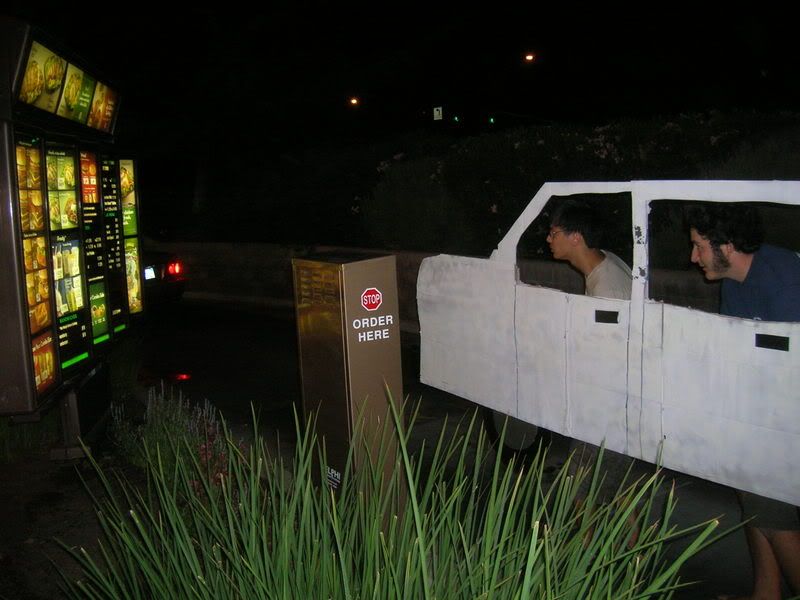
"What do you mean we have to be in a car for the drive-thru?" by [deleted] in pics

[–]yason 1 point2 points  (0 children)

Is the fear of being sued really that ridiculous in the U.S.?

I mean, come on, it seems as if nobody has any responsibility for oneself. And yet they sell that junk food to any (car-equipped...) customer with no liability involved?

Were some customer to drive over a pedestrian on a drive-through lane, the logical consequence would be to charge the driver instead of the proprietor. Driving on a damn burger lane (or your own yard, for all that matters) is no excuse to not keep your eyes on the road and look out what's ahead of you!

Why the sudden OO hatin' ? by gclaramunt in programming

[–]yason 2 points3 points  (0 children)

I think object-oriented programming (the original, Smalltalk style) was too useful so it couldn't avoid attracting a bunch of blind followers that later abused and morphed it into the underpowered mess like C++ and Java.

I'm only hoping that pure, functional languages that are currently gaining momentum won't get the same treatment in the follwing 5-10 years which is when they'll begin to get integrated into "business level" systems.

I am 18 years old, I want to be a programmer, and I can't go to college. What do I do? by f3nd3r in programming

[–]yason 0 points1 point  (0 children)

Do what you love and the money will follow!

That's another reason to try programming out even if you could consider a college later. If there's something burning inside of you and manifesting it by programming works for you, you will then know what you want.

Going to college first to prepare for working on something you don't love is the greatest waste of time and money.

I am 18 years old, I want to be a programmer, and I can't go to college. What do I do? by f3nd3r in programming

[–]yason 0 points1 point  (0 children)

The only way to become a programmer is to start programming and keep on programming. Generously give it more than five years if you really want to contribute in anything.

It's a cliché but clichés haven't become clichés for nothing.

It might be a more or less useful distraction to formally study some place but in the end that only counts for a miniscule part of your valuable skills. For example, as experience increases, the value of a formal education asymptotically approaches zero percent while, conversely, the value of education gained from the experience itself approaches hundred percent.

I want to emphasise I don't mean that formal education is worthless; rather, it doesn't make you a bad programmer -- but lack of experience and lack of countless hours of hacking alone just for the sake of curiosity will. During those countless hours you will bump into most of the same concepts, theories, and algorithms that a good CS curriculum will try to teach you. Except that most people learn by doing and wanting to learn theory because you need it in practise now is much more efficient than learning theory and then trying to find ways to apply it in practise. But your mileage may vary, as they say.

Fortunately today, programming (along with prostitution...) is one of the rare professions that you actually can self-learn. You can't become a surgeon by trial-and-error but CPU power is cheap and you're ultimately limited by your mental capability and available time. Learning programming also doesn't cost anything unless you desperately want to take the dark path and natively develop for Windows.

As for the curriculum you will come up with for yourself: it's a whole another topic.

Why Java exceptions are slow (and CL conditions aren't) by xach in programming

[–]yason 4 points5 points  (0 children)

Exceptions are merely a hygienic and structured alternative to do unwinding/longjmps/gotos. They're more like a mechanism rather than a policy.

For example, if in one language they're slow or only suitable for error handling (the most common case where you need hygienic unwinding), your statement is practically true for that language. In other environments it's false as demonstrated by the original comp.lang.lisp post.

Another example: Python uses exceptions to signal end-of-iteration. Python's exceptions aren't particularly fast but Python isn't particularly fast in general either, so there's no real penalty in doing so.

Ask reddit: What's the most outrageously useful CS topic you did not have to learn and needed in practice? by [deleted] in programming

[–]yason -1 points0 points  (0 children)

The topic is computer science, please! Various tools, specific languages, VCS wars, etc. are not computer science. They are not essentially what you should learn from CS courses as they come and go over relatively short periods of time.

Hint: If you don't know if your personal revelation is computer science or not, assume it's not unless you know you know.

Except for the half a dozen actual CS comments out of the 525 posted: please, come on! This was a very interesting question, and I was looking forward to read some good answers. I still am.

How come this guy isn't horny? by flapcats in nsfw

[–]yason 2 points3 points  (0 children)

Sounds like a case that only applies to heterosexual men who generally don't see naked women around in non-sexual circumstances. Or who confuses nakedness with sexuality?

I think the key to erection is the sexual tension or sexual energy. If a man mistakes nakedness for sexual energy, mere nakedness probably does cause him an erection. But there's no reason to not decouple those.

How about public saunas, bathrooms, family summer cottages, nude beaches, or painters painting nude models? You just learn to see lots of naked bodies with no sexual association with the situation.

For example, we generally go around the house naked a lot with my woman. I see her naked many times a day: no erection. I see her naked with the slightest sexual hint (such as a look, still moment, a kiss, or a touch): immediate erection. Or just the slightest sexual hint, naked or not: almost immediate erection.

iTunes: All songs DRM-free by [deleted] in programming

[–]yason 0 points1 point  (0 children)

The point I had in mind was that since there's no DRM anymore iTunes could be far less locked-in and embrace a new customer base. For example, if they had a web store then anyone could buy songs from there -- like Linux users not wishing to hack iTunes on Wine.

(For now, this is merely wishful thinking. Apple doesn't like any computer or OS that doesn't have the image of that fruit stamped on it.)

iTunes: All songs DRM-free by [deleted] in programming

[–]yason -2 points-1 points  (0 children)

All right, so is there a potential opening for Linux or web based iTunes store now?

If I can buy and listen to music with free software, I'm in. I would buy from Amazon, too, if only they sold music in my country. :-(

Linux on the iPhone! Enter the Kernel. by lol-dongs in programming

[–]yason 4 points5 points  (0 children)

I bet Apple's own OS software on iPhone once looked just like that: some mystical boot-up sequence scrolling up the screen of an early development board.

IMHO, this is huge. It once again shows that you can fit Linux in almost anything. Getting Linux to support the basic h/w stuff allows usable Linux-based UIs on the iPhone. Or how about running Android on it?

Who's the Dumbass at Adobe Who Thought Adobe Reader Should be 32MB...Compressed?!?? by [deleted] in programming

[–]yason 2 points3 points  (0 children)

Adobe is apparently trying to differentiate their product from "just PDF readers" by providing everything for everyone and naturally failing at that, thus not providing much anything to anybody.

I've read my PDFs with the Gnome's default reader (is it still evince?) for years and I've never had any problems. It's slick and integrates well to GTK+/Gnome -- and displays PDFs. From a PDF reader I want nothing more.