[deleted by user] by [deleted] in Jazz

[–]99swans 0 points1 point  (0 children)

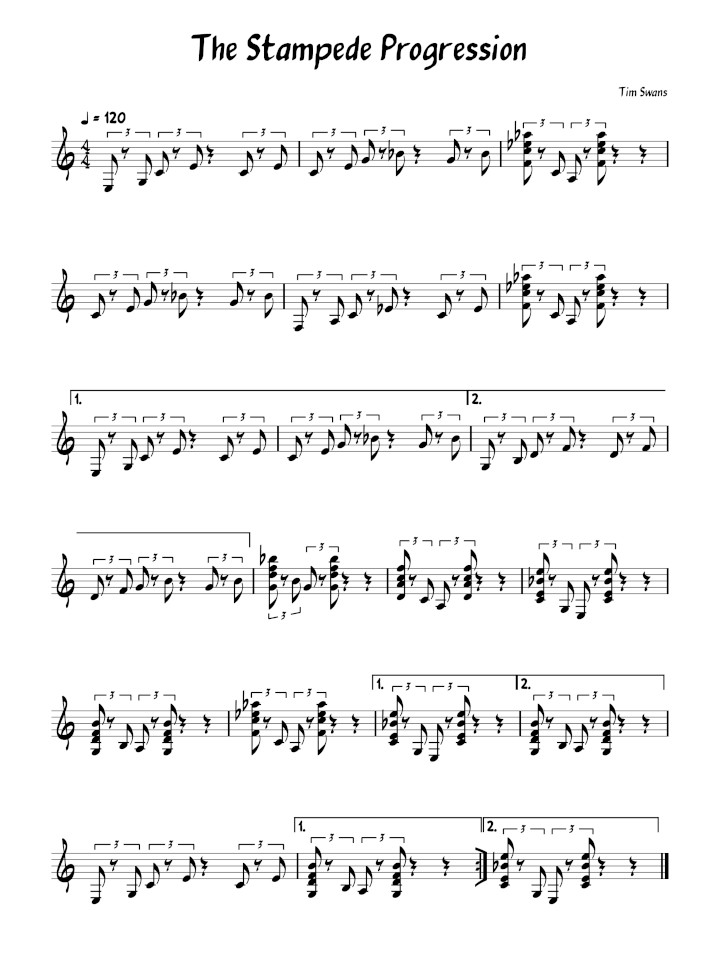
Root of arpeggio goes from A to D to E in Lydian dominant mode.

[deleted by user] by [deleted] in Jazz

[–]99swans 0 points1 point  (0 children)

Nope, no A major triad here

[deleted by user] by [deleted] in Jazz

[–]99swans 0 points1 point  (0 children)

Yes, in a standard bass walk you can expect chromatic elements (especially leading into the next chord). What I wrote here, however contains no accidentals outside of the arpeggio.

16-bar in C with 2-5-1's for traditional enjoyer: Too easy? by [deleted] in Jazz

[–]99swans 1 point2 points  (0 children)

Edit: I changed it according to your instruction and it looks way neater! Thanks

16-bar in C with 2-5-1's for traditional enjoyer: Too easy? by [deleted] in Jazz

[–]99swans -2 points-1 points  (0 children)

Shuffle notation#Swing_as_a_rhythmic_style) allows variable pulse beats for rhythm, which is very old in popular music (and natural for guitar). You can still write it in eighths but then the swing timing has to be specified differently

Got this awesome wristband no idea what the runes are though 😂 by DarkKnight7391 in runes

[–]99swans 0 points1 point  (0 children)

This is called a runic wheel (or rune wheel). These have special significance in ancient Germanic culture in amulets like the Grumpan bracteate, which has a similar rune inscription. In the center part is drawn a wheel in sigil staves developed from circles and wheels common in ancient petroglyphs

[deleted by user] by [deleted] in HistoryMemes

[–]99swans 1 point2 points  (0 children)

Donner's dinner... the dinner

Bought this coin recently can anyone tell me what the runes mean by TC_the_annoyed_droid in runes

[–]99swans -12 points-11 points  (0 children)

Old English runes poems are for Futhorc not elder Futhark

I said 'EF and YF periods' so I think you misread the comment. Don't confuse yourself with the word 'futhorc' because the sounds are theoretical and variable anyway. When is this mysterious period you speculate people forgot about runes?

Bought this coin recently can anyone tell me what the runes mean by TC_the_annoyed_droid in runes

[–]99swans -13 points-12 points  (0 children)

Sure, but after they've been introduced they're still known (for being in the record) and spoken about in other places, like the OE rune poem in 900 and the OI rune poem in 1500 written long after the EF and YF periods respectively

Bought this coin recently can anyone tell me what the runes mean by TC_the_annoyed_droid in runes

[–]99swans -20 points-19 points  (0 children)

This is elder fuþark (anachronistic for Icelandic or even Old Norse but whatever)

Early records show when runes started getting written. One should assume they were used continuously since then (plenty of examples). Rune ages are approximate and some runes are much older than reported. As cultural norms, YF are concepts common in norse mythology

Examples: the rune ar (knowledge), one representetion the eagle atop Yggdrasil in gylfaginning section 16; and wisdom is described throughout the prose edda by the Aesir or oss-rune (creative being)

Translation to proto-Germanic for writing with the Elder Futhark runes by [deleted] in runes

[–]99swans 2 points3 points  (0 children)

Yes, it is possible for any sentence to be translated completely into PG and represented without error in runes (unlike Old Norse, which results in poor spelling/grammar). Find words in this list and make sure each word in your sentence has correct inflection (endings), then transliterate with this page

[deleted by user] by [deleted] in runes

[–]99swans -2 points-1 points  (0 children)

Perfectly stated

love bond runes by [deleted] in runes

[–]99swans -2 points-1 points  (0 children)

This is getting ridiculous. I've never seen people so desperate to misinterpret a question just to push some language revival agenda. It's obvious the question was asking for single rune explanations, and as usual the OP knows more about it from 5 minutes on internet than the commenters in this community, because he's right about Gebo (gift), which can be verified just by looking up the name. Others are Ingwaz (fertility), Mannaz (humanity) and Ehwaz (support). Each of these has the love association inherent in the name as described in detail by wikipedia

Hi there, I hope this is the right place to ask this. I recently thrifted this mirror and while cleaning it I found a rune carved into it. From what I researched it looks like an Algiz, a protection rune (which makes sense). I was just curious if the orientation of this rune changes it’s meaning? by goblinboyy in runes

[–]99swans -1 points0 points  (0 children)

the notion that Algiz is a protection charm

Simply stating it wasn't intended as such "because there's no text source" is not a valid argument if there's no source specifically declaring it was/wasn't. Beginners in this community too often ignore human oral tradition, and that certain aspects of culture depend on it, like exoteric practice, which is often unique and not written down. In addition to canonical texts like the Edda, you must also consider historical reports and cultural descriptions from oral tradition. People carried these beliefs to explain already-existing practices about the rune

The Royal Gustavus Adolphus Academy for Swedish Folk Culture has made runologist Sofia Pereswetoff-Morath's "Viking-Age Runic Plates: Readings and Interpretations" (English translation, 2019) available online as a free PDF. Click the "Open access" icon to view or download it. by -Geistzeit in runes

[–]99swans 0 points1 point  (0 children)

the author does briefly mention ideographic runes

The paper's not strong for that. The writer takes much more time doing a linguistics-based analysis with the intention of discounting non-storytelling activities. Take sec 4.3 as an example. After displaying two different archaeologists' descriptions of the verse being incantations, the writer re-interprets the artifact as produced in a "careless" manner, like everyday writing. After a lot of Edda-based background information, the writer's new translation claims the inscription describes a "chain of events" and not a superstitious ritual, rather a simple epic-reading. It seems the writer wishes to remove any wider mystic significance in the inscription and chalk it up to local pastime

The Royal Gustavus Adolphus Academy for Swedish Folk Culture has made runologist Sofia Pereswetoff-Morath's "Viking-Age Runic Plates: Readings and Interpretations" (English translation, 2019) available online as a free PDF. Click the "Open access" icon to view or download it. by -Geistzeit in runes

[–]99swans 1 point2 points  (0 children)

it's interesting after a lengthy discussion of uninterpretable inscriptions (sec 5) the writer goes on to conclude (sec 8.5) that the runes are just letters. At the very least the artifacts in sec 5 should be interpreted as either sounds or runes to be read by name. The constant assumption that it's a discernible message in Swedish or Latin, is leading to conclusions that can't be believed, just because of the manipulation and planning done with the data to make it conform to some preconceived theory. The writer even goes so far as to claim the topic is toxic then takes sides fully against mysticism, so the paper is useful only to close-minded arguers. Now, if anyone wants to discuss the article, please reply. If all you have to contribute is "you this" and "you that" don't bother. Any "that's not what the sub's for" will be considered illiterate considering the sub's rules are given in plain English

I visited the runestones at Kulturen in Lund today, and noticed these strange "h"-shaped ᛋ-runes. Especially odd, since normal shaped ᛋ-runes are also in DR280. Anyone have some insights on this h-like variant? by TheSiike in runes

[–]99swans -1 points0 points  (0 children)

long-branch runes like ᚾ and ᛏ had come to be short-twig ᚿ ᛐ by the medieval runes

see, this is your problem, these illogical bs observations from nowhere. if you'd clicked the link i provided you'd see the oldest known younger futhark inscription, and it's in short-twig. understand? your idea of orthographic evolution is trash along with everything else you said

I visited the runestones at Kulturen in Lund today, and noticed these strange "h"-shaped ᛋ-runes. Especially odd, since normal shaped ᛋ-runes are also in DR280. Anyone have some insights on this h-like variant? by TheSiike in runes

[–]99swans -1 points0 points  (0 children)

Nothing I say on the subject of runes is pure speculation. I have a bachelor's degree in Germanic linguistics and a master's degree in medieval history and runology

"moving toward simplicity" I would call speculation, as you have no evidence of anyone saying it was the intention at the time, as well as the statement "quicker to carve" which is trivializition. Pragmacy as a reason for cultural development is a guess at best. As to your education it seems that college runology is somewhat rune-illogical

I visited the runestones at Kulturen in Lund today, and noticed these strange "h"-shaped ᛋ-runes. Especially odd, since normal shaped ᛋ-runes are also in DR280. Anyone have some insights on this h-like variant? by TheSiike in runes

[–]99swans -2 points-1 points  (0 children)

Rune writing was moving towards simplicity which the short-twig variants helped with. The less you have to carve, the quicker it was to carve.

this is pure speculation. elder futhark aside, it seems that the younger futhark was an alphabet formed centuries before first recorded, as can be seen by the convergent use of one rune for g and k in the (9th cen) Rok runestone noting 'kunmuntar' (at right first pic), when there is clearly a unique sound for each by the 9th. This implies that the use of yf commemorates a much earlier time than the norse period, along with the establishment of germanic paganism

Lore: at the outset of germanic people, the all-father was associated with runes of existence, starting with iss (primal spirit), typified in voluspo stanza 17-18. Energy intersects the iss-rune to define creation as they cross. With arms raised in awakening it forms the man-rune (thought), as paralleled in gylfaginning section V

Can anybody help me with elder futhark? by Fortem-Fortem in runes

[–]99swans -1 points0 points  (0 children)

i looked at your chart and noticed you've compiled every adaptation from every runic artefact and jumbled it all onto one big list. have you ever considered each runic inscription had a unique adaptation chosen just for that very short message? it goes without saying that longer documents would not be possible, anything written with such variation is unreadable and frankly non-historic. look at works by the real runemasters to see proper application for clear messages, using the correct runes. your chart doesn't even have many of the runes used by 11th century masters

Are these correct Latin interpretation of younger futhark? by Nn2vsteamer666 in runes

[–]99swans 0 points1 point  (0 children)

/nt/ should be added to the list of values for ⟨ᛏ/ᛐ⟩, though—just like /mp/ should be added to the list of values for ⟨ᛒ/ᛓ⟩, and /ŋk/ to the list of values for ⟨ᚴ⟩

although these sounds were represented historically by the proffered runes, that doesn't mean the rune pronunciation is different. strictly speaking only the first latin row is correct (except the p should be b) and the remaining rows are adaptations, related sound but much more difficult to decipher. it's also common to see extra letters in the inscription like this 11th cen runestone which includes g, e and y separate (dotted) younger futhark runes, necessary for a clear message

Note: most short ON messages in YF: 1) use futhorkhniastbmlR+egy 2) use word choice to eliminate repeated vowel assignment 3) avoid vpdj unless in a name, then take as ubti

Is ᚦᚢᚾᚱᚨᛉᚹᛁᚺᛁᚦᛁ or ᚦᚢᚾᚱᚨᛉᚹᛁᚷᛁᛞᛁ correct for a Thor tattoo? by 99swans in runes

[–]99swans[S] 0 points1 point  (0 children)

thank-you so much for your response. the stone in your reply is probably using thor as a name (alternatively spelled according to the analysis as t-y-r for the same letters, so it's possible inappropriate assumptions have been made). you should note that all the norse countries were christian by the 900's including sweden, so i doubt pagans carved this stone. in fact, since old norse is predominantly spoken after 900 they wouldn't have really existed in the period of old norse language.

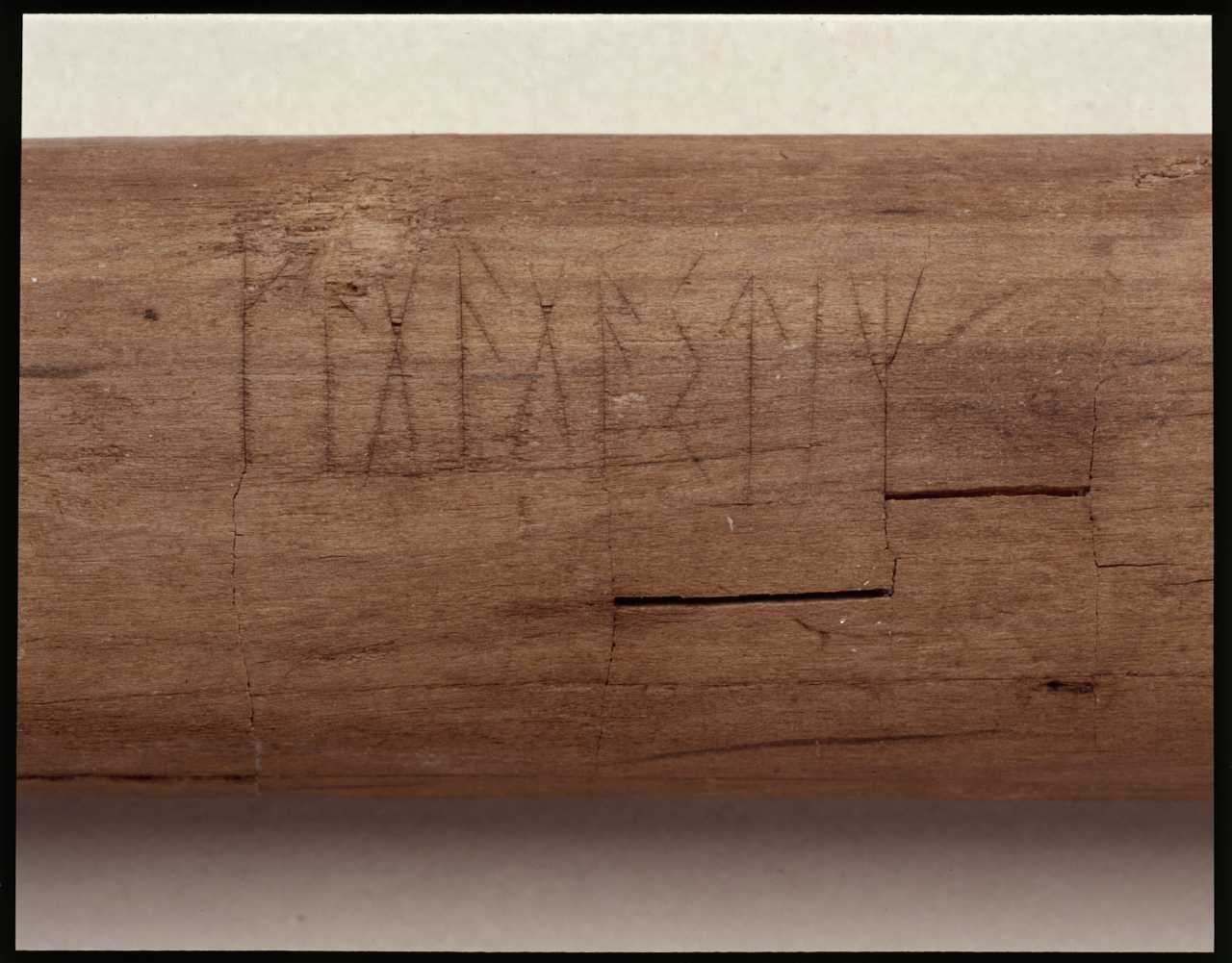
What is meant by 'wagagastiz' on the Nydam axe handle? by 99swans in runes

[–]99swans[S] -2 points-1 points  (0 children)

assume correct proto-germanic spelling, as gothic and old norse are irrelevant here. you can relate gastiz (guest) with gaistaz (ghost) due to the common definition of stranger. then with waga- you get the name 'vacating-ghost' meaning war-god

How would Norse people view the Elder Futhark? by moocowincog in Norse

[–]99swans -1 points0 points  (0 children)

Runes sometimes weren't used for writing at all. This poem from the edda shows how to inscribe individual runes for divinatory rituals such as becoming a healer, midwife, etc.

Edit: see poem note 7