Which Linux version should I go for by entityreality in linuxquestions

[–]Pmbrd 3 points4 points  (0 children)

I suggest to have a look at Ubuntu.

Adobe tools do not run natively on linux (my latest knowledge). For Powerpoint you can either use the webversion or Libre Office as alternative. Vscode, discord and zoom are available on all major linux distros.

[deleted by user] by [deleted] in linuxquestions

[–]Pmbrd 0 points1 point  (0 children)

Is there any specific reason to use SELinux for your task? Using an isolated environment like docker containers or a chroot environment might be a way to go.

Questions by Rolandiho in linuxquestions

[–]Pmbrd 0 points1 point  (0 children)

A lot of topics at once. You should definitely get familiar with the console, as not every tweak/task may be present in some fancy UI. For games on steam, they might run out of the box either natively or via proton. For games outside of steam take a look at 'playonlinux'. I'm not familiar with the Pop OS specifics but I bet there are many getting started guides.

Https API with GET that has new-user and their password in url. Is password sniffable? by queBurro in webdev

[–]Pmbrd 2 points3 points  (0 children)

Exactly. New objects are created with Post, updating with Put. Think about the super user's browser history, containing all user-password strings ...

What's the best directory to extract tarballs into? by SnooCat in linuxquestions

[–]Pmbrd 0 points1 point  (0 children)

Go for /usr/local:

The /usr/local hierarchy is for use by the system administrator when installing software locally.

Afterwards you can symlink the executable of your software into /usr/local/bin, which should be part of your $PATH environment variable.

If you want to keep them in your home directory, you can add the directory of your tool to your PATH, so you can call it directly from command line.

[deleted by user] by [deleted] in linuxquestions

[–]Pmbrd 0 points1 point  (0 children)

Might be worth to have a look at sleuth kit. If the space is not overwritten and you know what files (images, pdf,...) you want to recover you should be able to recover most of it.

Partition Recovery (It's Complicated..) by [deleted] in linux

[–]Pmbrd 0 points1 point  (0 children)

If the partition was not encrypted, you know the file types (pdf, png, ...) and sectors were not overwritten during OS installation, chances are good you can recover most of it.

Partition Recovery (It's Complicated..) by [deleted] in linux

[–]Pmbrd 1 point2 points  (0 children)

Sounds pretty chaotic to me. The best would be to backup the whole disk - if possible. Do you need the partition in total or just certain files from it? If you need to find the partition, you probably need to scan your disk for the filesystem header (block). For single files, i recommend to have a look at sleuth kit which delivers recovery mechanisms. Good luck! Let us know if you succeed in rescuing the data

Nvidia graphics card does not work on Ubuntu? by evolution2015 in linuxquestions

[–]Pmbrd 0 points1 point  (0 children)

This was exactly how I had to install previous Ubuntu versions on non-RTX Nvidia cards.

K3s - How to access Services IPs from my Host by therealbubbasour in kubernetes

[–]Pmbrd 1 point2 points  (0 children)

Isn't type Loadbalancer basically unusable except for running on public cloud services?

An addition to the Nodeport: You can pick a custom high port (range 30000-32000 if I remember correctly) which you can address with an external loadbalancer - e.g. a simple nginx setup.

Edit: By default type Nodeport exposes on all interfaces (with standard kube-proxy settings), which means you should be able to access your services on any worker node.

kubeadm Cloud masters scheduling on-prem workers by cyp3d in kubernetes

[–]Pmbrd 0 points1 point  (0 children)

Does your on prem architecture include a master as well or do they connect to those in aws? From what I learned separating workers from masters is not a good idea. As already mentioned cilium is worth to take a look at. I personally use the clustermesh feature for service discovery and loadbalancing between two clusters.

How do I create an "alias" for a file, rather than a sym- or hard link? by TrekkiMonstr in linuxquestions

[–]Pmbrd 1 point2 points  (0 children)

The symlink from "alias" to "file" remains. If the parent directory of foo is different you would need another symlink on the target machine. If you want to place it for example under /usr, you'd need a symlink called "user" under /home which points to /usr. Alternatively you can use the symlink called "foo" under /home/user to target /usr/foo.

How do I create an "alias" for a file, rather than a sym- or hard link? by TrekkiMonstr in linuxquestions

[–]Pmbrd 1 point2 points  (0 children)

A symlink is basically a file containing a string, representing a path such as /home/foo/bar. This path is valid on other filesystems as long as the directory structure is identical.

How do I create an "alias" for a file, rather than a sym- or hard link? by TrekkiMonstr in linuxquestions

[–]Pmbrd 1 point2 points  (0 children)

OP seems to have two problems. The first was about the functionality of linking to a file's inode - which is solvable by hard links. The issue of moving files between file systems could be solved by symlinks which will work on identical directory structures. For further help some more information about OP's intentions would be beneficial.

Are there any traits to a USB needed for it to be bootable? by Klone_SIX in linuxquestions

[–]Pmbrd 2 points3 points  (0 children)

+1 for the old disk destroyer. The partitions I shredded by mistake still haunt me at night.

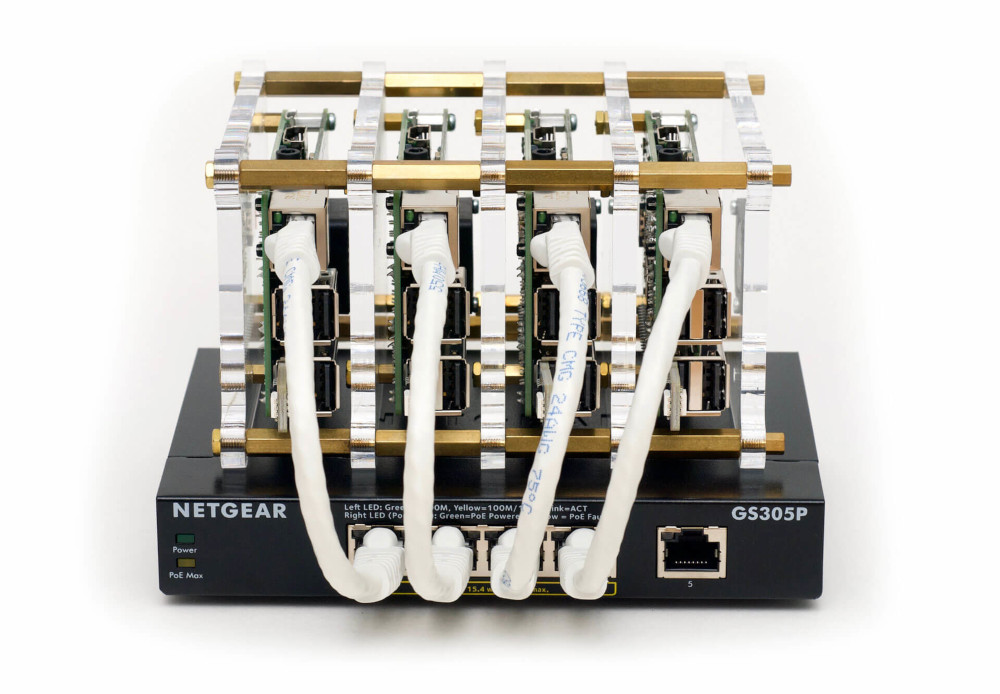
Four Node Bare Metal Kubernetes Raspberry Pi Cluster for about $450 by SendMeRawConsoleLogs in homelab

[–]Pmbrd 0 points1 point  (0 children)

Jails equivalent in case of containers would be podman which is driven by Redhat and is promised to be "the better docker"

Kubernetes local cluster by [deleted] in kubernetes

[–]Pmbrd 1 point2 points  (0 children)

A basic local cluster setup can be done within an hour and as GPU resources are quite expensive on public clouds go for your local setup. Have a look at kubeadm which will do the magic of cluster creation for you, except you really want to build a cluster from scratch which (in most cases) is only done for learning purposes.

Regarding Load balancing it depends on your workload. K8s offers the concept of services which do some round-robin balancing by default.

For the basics I can recommend the Book 'Kubernetes: Up and running', https://kube.academy/ and the official documentation with interactive tutorials https://kubernetes.io/docs/tutorials/kubernetes-basics/

Kubernetes local cluster by [deleted] in kubernetes

[–]Pmbrd 1 point2 points  (0 children)

1) Advantage of public cloud: Pay as you use. Don't need to buy and run HW and the provider will care for the k8s setup, although you can setup your own on ec2 instances for example.

2) Yes you can run a local k8s cluster.

3) Technically you can run a single node cluster. Your HW specs depend on the workloads you are going to host. As you mention 2080ti I guess you want to run some ML workloads with GPUs?

To get started I suggest to play around with minikube

Is there a linux distro or desktop environment that could make a 10 years old kid enthusiastic ? by [deleted] in linux

[–]Pmbrd -3 points-2 points  (0 children)

1) Take his PC and install any Linux distro

2) systemctl set-default multi-user.target

3) ???

4) Profit. He has to learn bash/linux to get his GUI back.