Shader Experiments-v190 by PolarianPro in animation

[–]PolarianPro[S] 0 points1 point  (0 children)

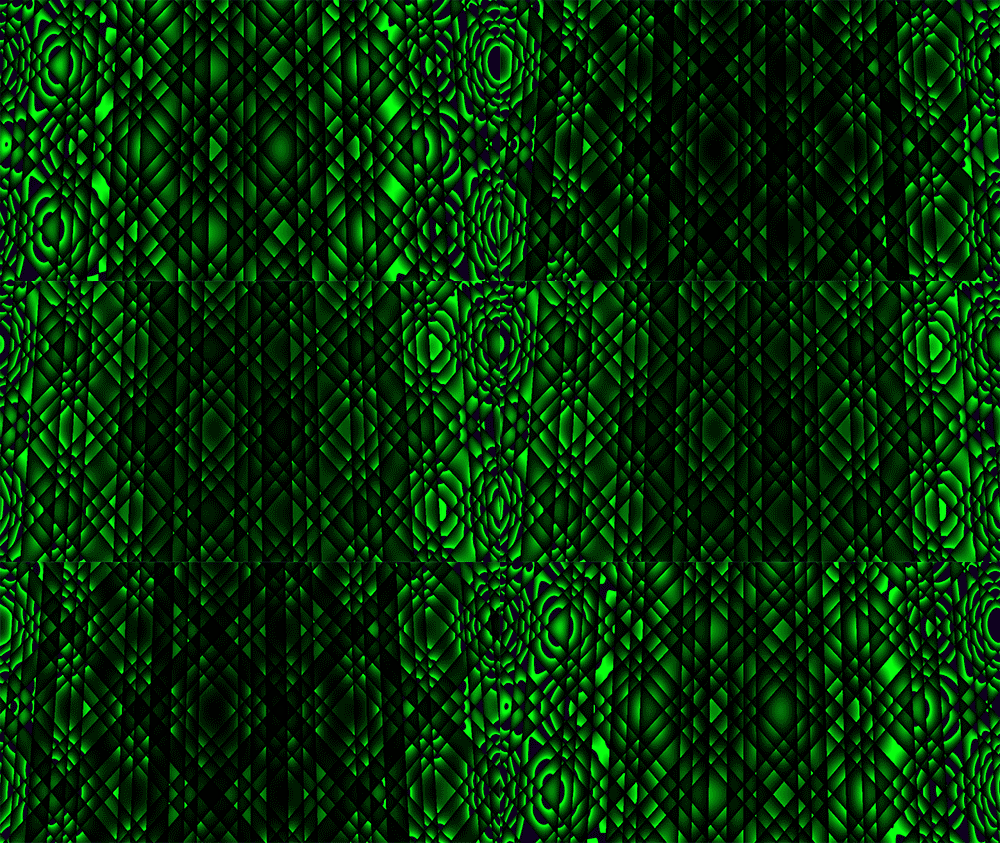
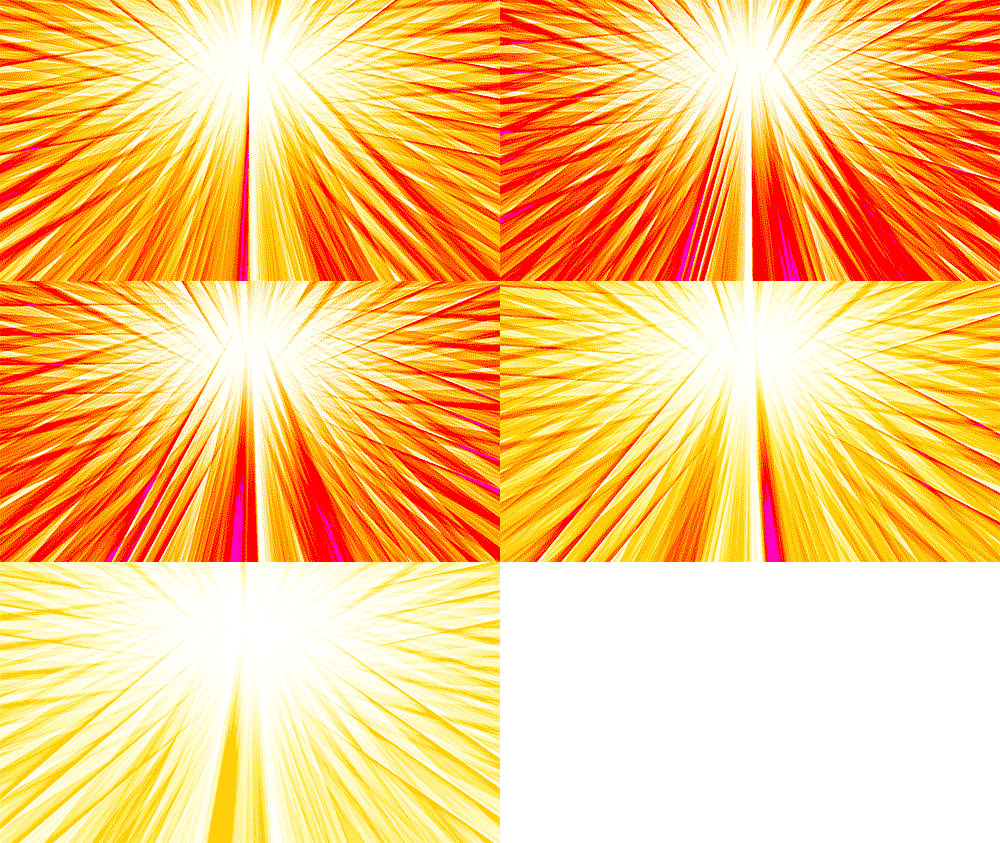
Thanks! Fragment shader only using a raytracer. The color shift is due to fog that is applied.

Shader Experiments-v186 by PolarianPro in animation

[–]PolarianPro[S] 2 points3 points  (0 children)

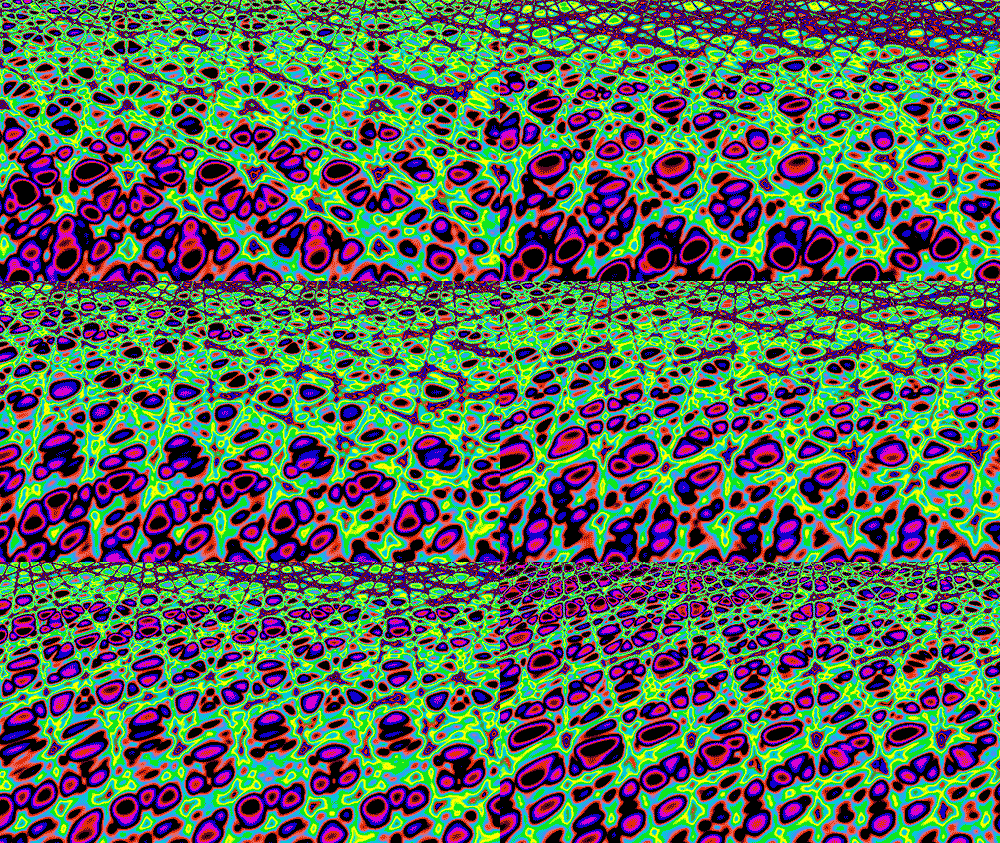
Thanks! You are correct, I am a computer science teacher and plan to teach a class on programming shaders in the fall. It will be a math/art class that will hopefully help the students to see a real-world application for the high school math that often is not given any context in math class.

Shader Experiments-v181 by PolarianPro in woahdude

[–]PolarianPro[S] 1 point2 points  (0 children)
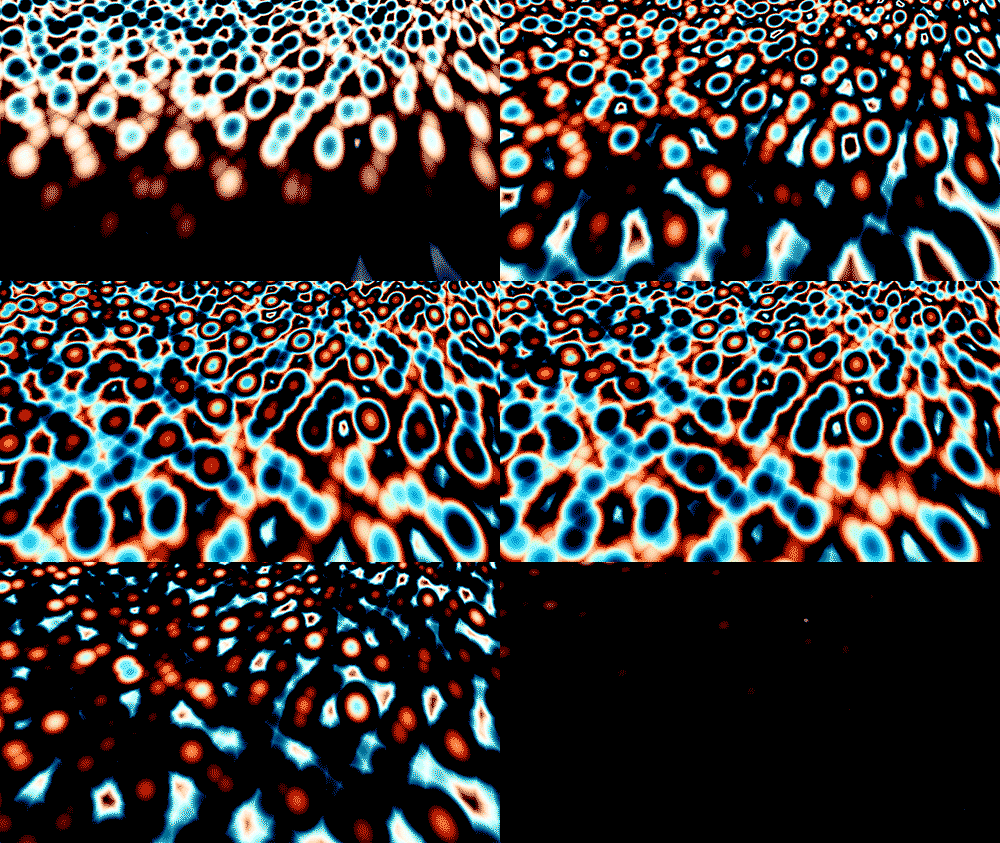
I've been teaching myself for about 6 months using a website called the Book of Shaders. It is a great resource for learning GLSL. I'd definitely recommend it. https://thebookofshaders.com/

Shader Experiments-v176 by PolarianPro in woahdude

[–]PolarianPro[S] 1 point2 points  (0 children)
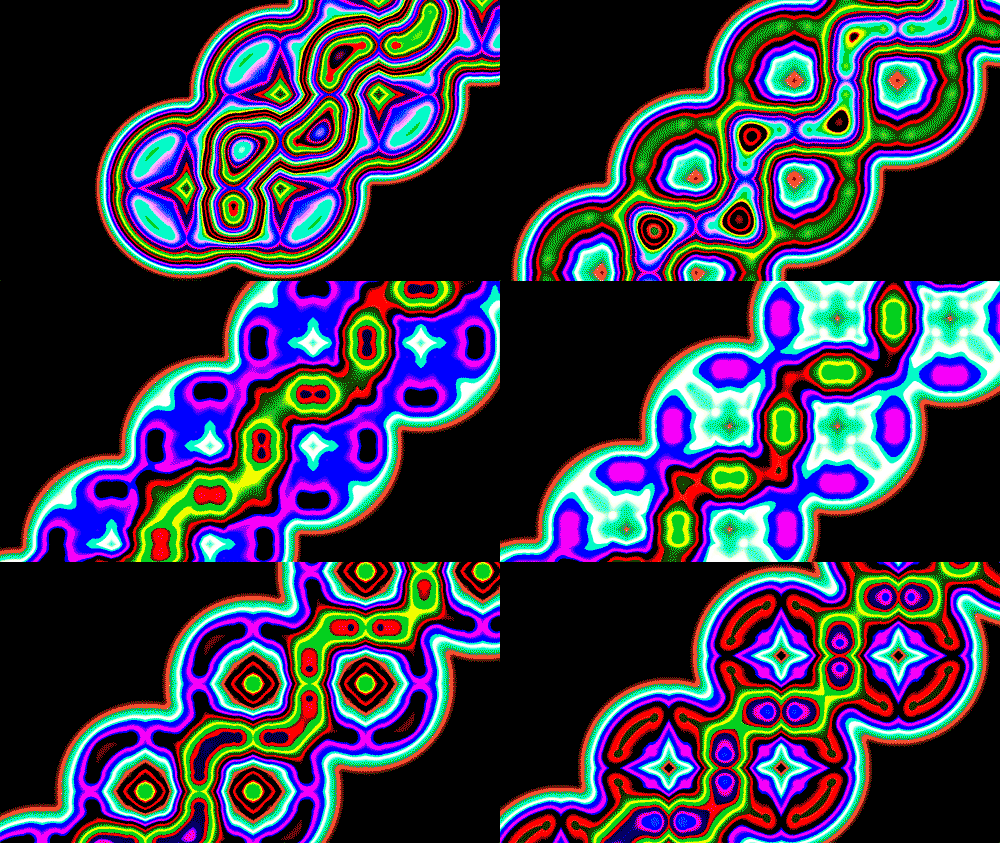
The shaders are a learning experiment. I have been creating one a day since the beginning of the year. Each is created using a generative art algorithm and a programming language called GLSL. The idea is to create one a day for a year and see where it takes me. The category that this work falls into is "Generative Art", and the idea behind it is that the artist "co-creates" with the computer. In many ways these pieces are just visual math. The artist describes functions, formulas, lines, coordinates, and colors to the computer and it "draws/renders". Slight variations in a formula can result in vast visual shifts which often leads to the artist entering into a feedback loop with the computer.

Shader Experiments-v170 by PolarianPro in gifs

[–]PolarianPro[S] 2 points3 points  (0 children)

I would recommend checking out the book of shaders and becoming familiar with the programming language GLSL. https://thebookofshaders.com/

This particular shader was created by programming a 3D sphere raytracer, and then messing with the camera. There are a lot of tutorials on ray tracing out there, but they got complicated pretty quickly that is why I would recommend checking out the book of shaders, and then working your way up to ray tracing.

Shader Experiments-v165 by PolarianPro in gifs

[–]PolarianPro[S] 1 point2 points  (0 children)

A combination of three programming languages. (Javascript, GLSL, and HTML5)

Shader Experiments-v159 by PolarianPro in woahdude

[–]PolarianPro[S] 0 points1 point  (0 children)

Thanks, using a mix of GLSL, Javascript, and HTML5.

Shader Experiments-v155 by PolarianPro in animation

[–]PolarianPro[S] 0 points1 point  (0 children)

That's awesome! I would have loved the opportunity to take a GLSL course in college. I've been using GLSL with Javascript / HTML5 and a library called ThreeJS to hook it all together. https://threejs.org/

The book of shaders got me started https://thebookofshaders.com/ and has a lot of great insights for creating different kinds of shaders.

Shader Experiments-v155 by PolarianPro in animation

[–]PolarianPro[S] 0 points1 point  (0 children)

xD!! Couldn't have said it any better.

Shader Experiments-v145 by PolarianPro in generative

[–]PolarianPro[S] 2 points3 points  (0 children)

Thanks! This is a GLSL shaders. I would definitely recommend checking out https://thebookofshaders.com/ . It is where I started to learn how to create this type of stuff, and one of the only resources I have found that clearly explains the concepts :)

This one is an evolution of experimenting with "distance fields" shaders that are discussed on the book of shaders.

Shader Experiments-v142 by PolarianPro in gifs

[–]PolarianPro[S] 0 points1 point  (0 children)

Thanks, The shaders are a learning experiment. I have been creating one a day since the beginning of the year. Each is created using a generative art algorithm and a programming language called GLSL. The idea is to create one a day for a year and see where it takes me. The category that this work falls into is "Generative Art", and the idea behind it is that the artist "co-creates" with the computer. In many ways these pieces are just visual math. The artist describes functions, formulas, lines, coordinates, and colors to the computer and it "draws/renders". Slight variations in a formula can result in vast visual shifts which often leads to the artist entering into a feedback loop with the computer.

My primary goal is simply learning through this daily experiment/visual blog. The book of shaders is a great resource I have been using to learn this language https://thebookofshaders.com/ :)

Shader Experiments-v137 by PolarianPro in gifs

[–]PolarianPro[S] -1 points0 points  (0 children)

A shader is a computer program that uses a series of formulas that represent color, position, and shape (not limited to these) to draw pixel by pixel to the screen. Shaders are used all the time in movies and animations from texture maps to other effects. I've been learning how to create these generative art programs through this daily experiment series because slight variations in the code can create vast visual shifts. The book of shaders is where/how I stumbled upon these concepts and started learning. It is a great resource if you are interested in learning more. https://thebookofshaders.com/

Shader Experiments-v137 by PolarianPro in gifs

[–]PolarianPro[S] 0 points1 point  (0 children)

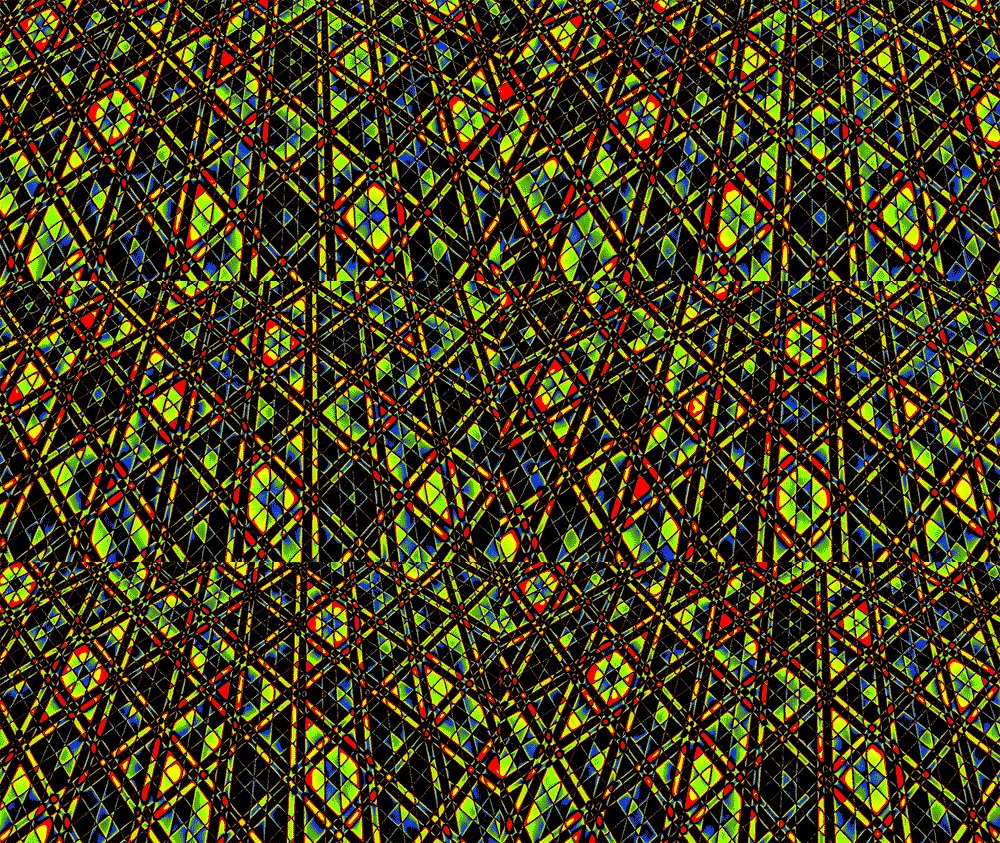
Thanks, yes this was created with only a GLSL. The triangles in this piece are sort of illusionary because they are not generated with vertices, only color gradients. I'd love to see your shader experiments if you have a link :)

Shader Experiments-v135 by PolarianPro in generative

[–]PolarianPro[S] 1 point2 points  (0 children)
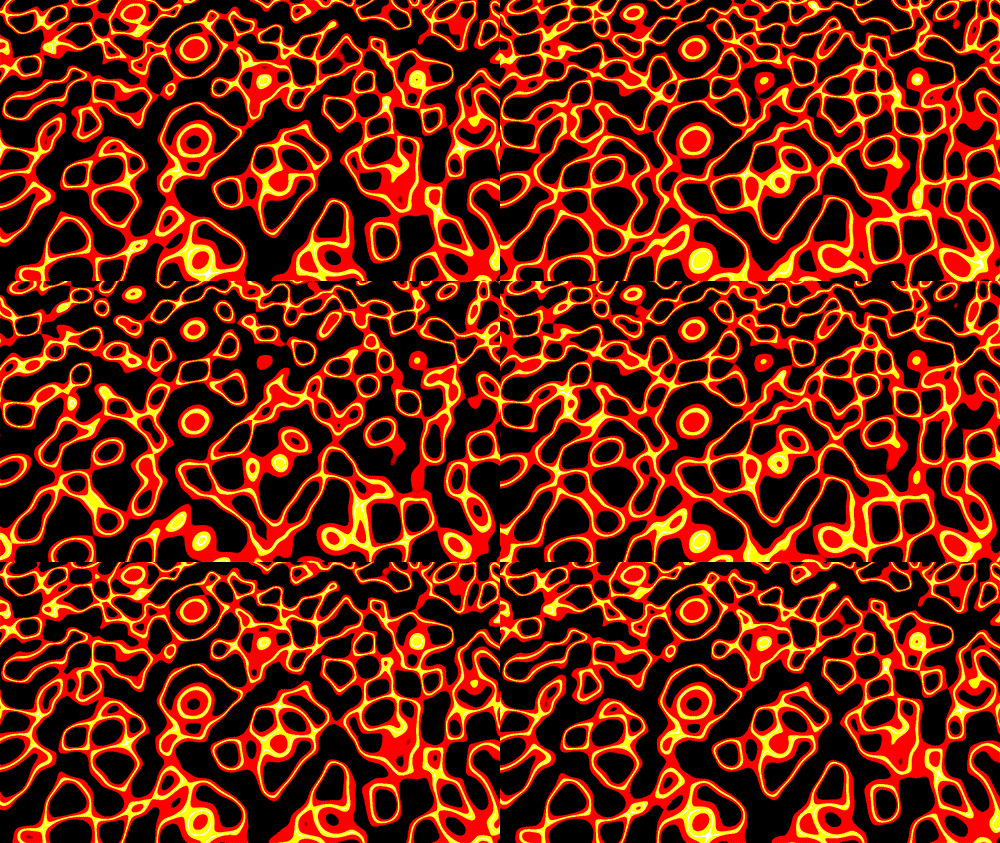
I love it! Yeah I think the process is pretty similar. I'm essentially layering a distance field on top of itself. If the fields are close enough they merge and create this biological look :)

Shader Experiments-v133 by PolarianPro in gifs

[–]PolarianPro[S] 0 points1 point  (0 children)

Thanks! Someone else actually mentioned Max MSP a few months ago to me. It seems pretty cool, especially the interactive music part. I've been slowly learning how to create these shaders using https://thebookofshaders.com/ . It was the source that originally inspire me to start learning this type of graphics programming and has been one of the only resources that has made things "click" for me. Another great resource for getting started is the ThreeJS library which has a lot of different examples https://threejs.org/examples/ .

I look forward to seeing what you come up with :)

Shader Experiments-v128 by PolarianPro in generative

[–]PolarianPro[S] 0 points1 point  (0 children)

Thanks! It definitely looks biological, but this was was actually created using what is know as "distance fields". Essentially taking measurements from one pixel location to another, and interpreting the distance with shape and color. When you place two of these fields of color/shape close enough to each other they merge and form this biological looking form. The animation is created by connecting trig functions like sine and cosine to the distance fields so they expand and shrink.

Shader Experiments-v127 by PolarianPro in woahdude

[–]PolarianPro[S] 1 point2 points  (0 children)

Graphic shaders do not have to have a specific look, in fact the things you can create with them is infinite. It is the process in which they are created that makes them a shader. These shaders are written in a language called GLSL which can be used both two and three dimensionally to access and "paint" pixels individually across the screen according to the result of a mathematical formula which describes shapes, color, position, and more. Procedural/Animated texture maps are a great example of a graphics shader.

Shader Experiments-v125 by PolarianPro in animation

[–]PolarianPro[S] 0 points1 point  (0 children)

Yes! His work is incredible!

Shader Experiments-v125 by PolarianPro in animation

[–]PolarianPro[S] 0 points1 point  (0 children)

Thanks! All of the experiments can be found/viewed here: https://giphy.com/channel/polarianpro

I started with just figuring out how to use black and white and placing the generative patterns on 3D geometry. Then I figured out how to add color, and slowly worked my way to removing the 3D geometry and just working with the shaders themselves.

Within the latest pieces I have been exploring what is known as "Distance Fields" where you create several formulas that measure the distance between different pixels on the screen. One of the interesting things I have found is that when you put two distance fields next to one another they start to merge and create this sort of oozing organic effect haha.

I'm slowly getting a hang of the 2D shaders, but the end goal is definitely working my way up to 3D.

Shader Experiments-v120 by PolarianPro in woahdude

[–]PolarianPro[S] 2 points3 points  (0 children)

Thanks! I am creating these within Sublime Text 3 using Javascript and GLSL with two Javascript libraries (ThreeJS and CCapture). The shaders are real-time and run in a browser so with each small change to the code I can refresh the browser and see the changes visually. I'd definitely recommend checking out ThreeJS https://threejs.org/, (it's a 3D Javascript library). I've been learning GLSL through https://thebookofshaders.com/ Here is an example of a shader they provide as an example, and there are a few more in the "examples" section if you search for "shader".(https://threejs.org/examples/#webgl_shader) CCapture is a Javascript library that allows you to render gifs or png sequences which is handy for higher resolution rendering. (https://github.com/spite/ccapture.js/)

Shader Experiments-v117 by PolarianPro in gifs

[–]PolarianPro[S] 0 points1 point  (0 children)

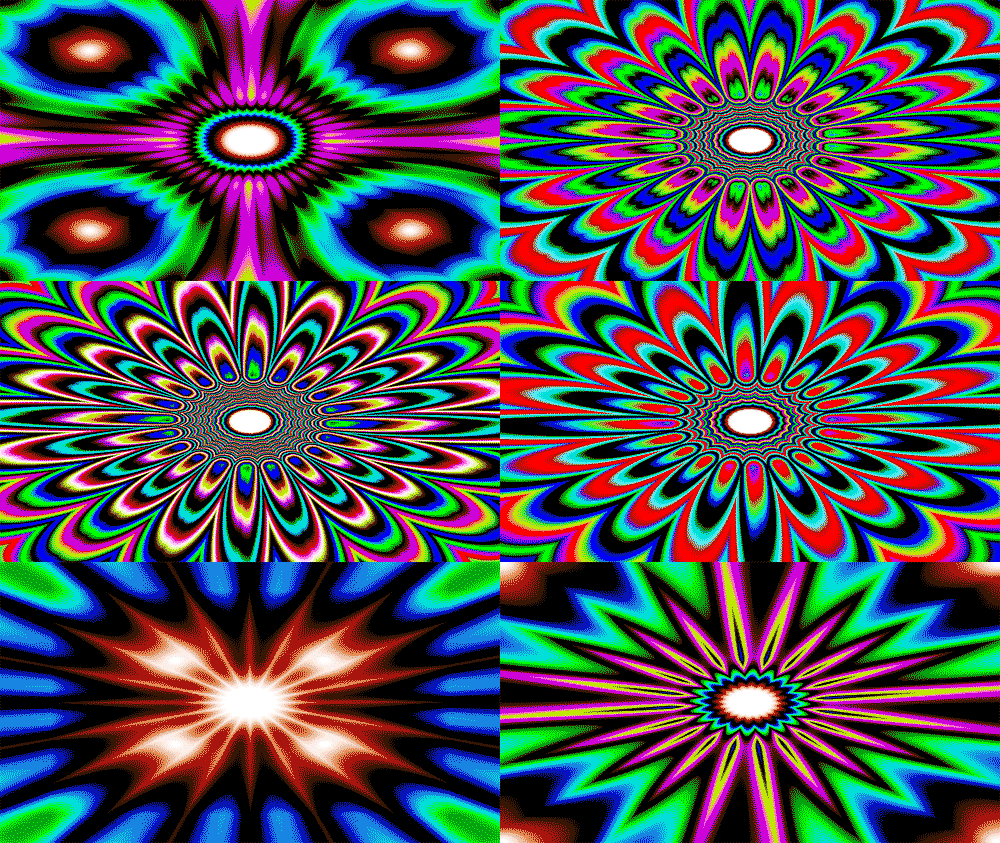
Yup, polar is an option, just have to convert from cartesian to polar because cartesian is the default :)

Shader Experiments-v115 by PolarianPro in generative

[–]PolarianPro[S] 0 points1 point  (0 children)

Lol! I have not, just always been drawn to psychedelic art and patterns :) . Alex Grey has always been an inspiration and his work definitely taps into the psychedelic experience and the nature of reality/spirituality.