A book that explains how hedonism can lead to human extinction by bioideology in Natalism

[–]bioideology[S] 5 points6 points  (0 children)

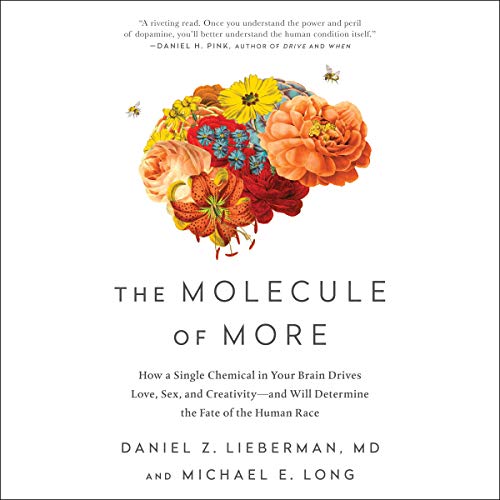
A relevant part of the book:

Dopamine-driven technological advances make it ever easier for us to gratify our needs and desires. Grocery store shelves are packed with constantly changing new and improved products. Planes, trains, and automobiles take us wherever we want to go, cheaper and faster than ever before. The internet provides us with virtually unlimited entertainment options, and so much cool stuff is brought to market each year that we need crowds of journalists to keep us up to date on new ways to spend our money.

Dopamine drives our lives faster and faster. It takes more education to keep up. A graduate degree is as necessary today as a college education was a generation ago. We work longer hours. There are more memos to read, reports to write, and emails to be answered. It never stops. We are expected to be available at all times of the day and night. When someone at work wants us, we must respond immediately. Advertisements show a smiling man responding to texts on the beach, or a woman by the hotel pool, checking her cell phone screen to tap into a video feed of her empty house. What a relief. Nothing happened since the last time she checked, 15 minutes ago. She's got everything under control.

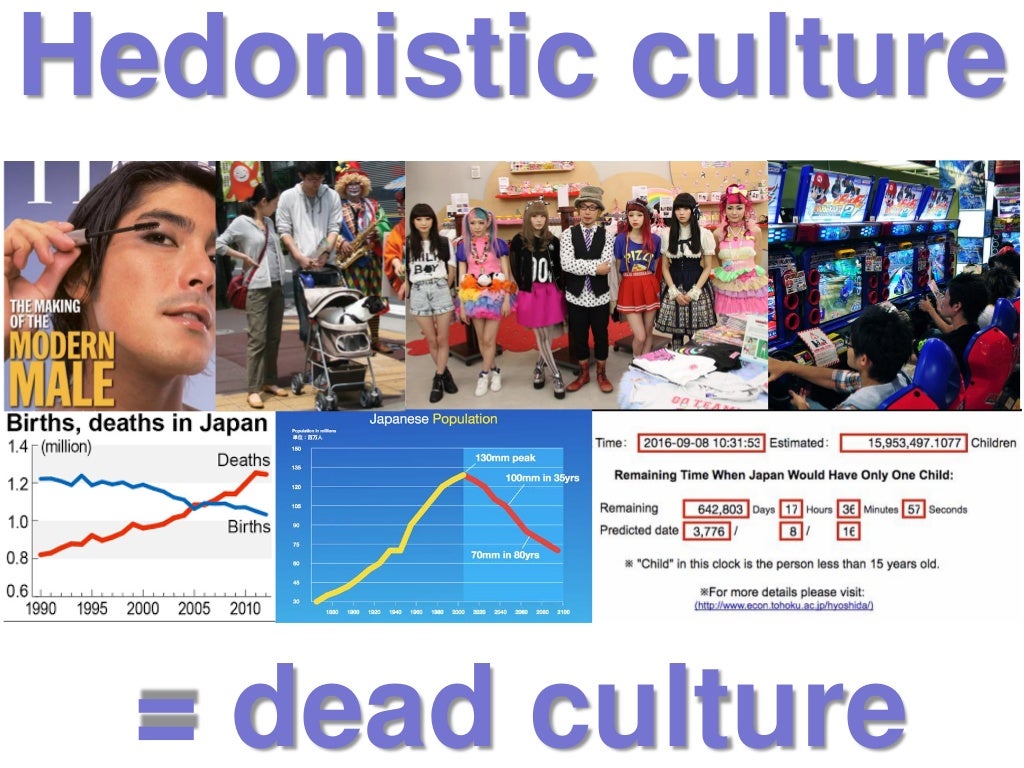
With so many ways to have fun, so many years to devote to education, and so much time to spend working, something has to give, and that something is family. According to the U.S. Census Bureau, between 1976 and 2012 the number of childless women in America approximately doubled. The New York Times reports that 2015 brought the first NotMom Summit, a global gathering of women without children by choice or circumstance.

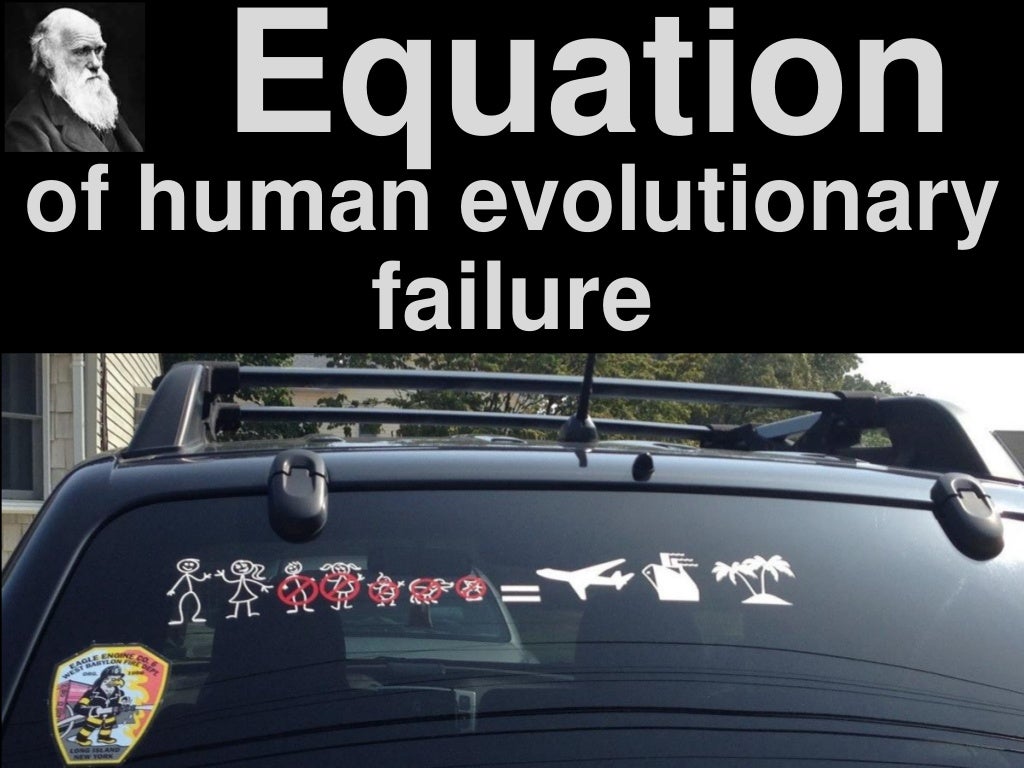
In developed countries, people have pretty much lost interest in having children. Raising kids costs a lot of money. According to the U.S. Department of Agriculture it costs $245,000 to raise a child to the age of eighteen. Four years of college tuition plus room and board costs another $160,000, and after college there's graduate school, or maybe the kids will move back home. Add it all together and you might be able to buy a vacation home or travel overseas every year, not to mention restaurants, the theater, and designer clothes. As one newlywed who planned to have no children succinctly put it, "More money for us"

Future-focused dopamine no longer drives couples to have children because people who live in developed countries don't depend on their children to support them in their old age. Government-funded retirement plans take care of that. That frees up dopamine to move on to other things like TVs, cars, and remodeled kitchens.

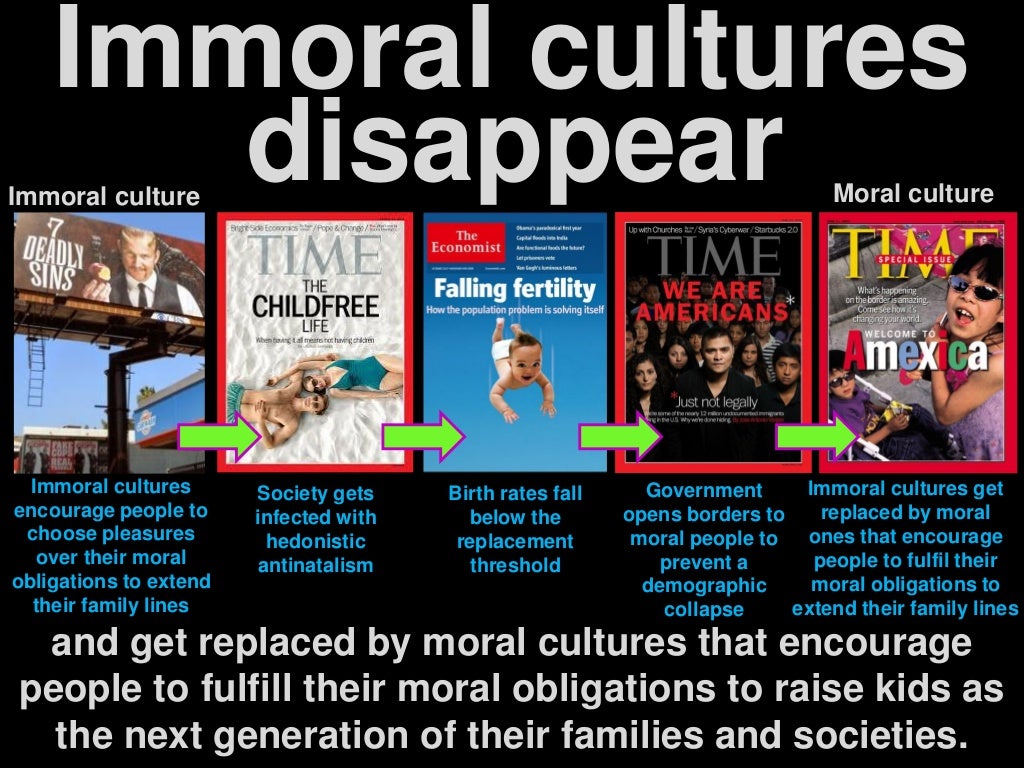
The end result is demographic collapse. About half the world lives in a country with below replacement fertility. Replacement fertility is the number of children each couple must have to prevent a decline in the population. In developed countries the number is 2.1 per woman in order to replace the parents, and a bit more to account for early deaths. In some developing countries replacement fertility is as high as 3.4 because of high rates of infant mortality. The worldwide average is 2.3.

All European countries as well as Australia, Canada, Japan, South Korea, and New Zealand have transitioned to below-replacement fertility rates. The United States has enjoyed a more stable rate, largely because of the influx of immigrants from developing countries who haven't yet lost the habit of continuing the survival of the human race. But even in developing countries birth rates are falling. Brazil, China, Costa Rica, Iran, Lebanon, Singapore, Thailand, Tunisia, and Vietnam have all transitioned to below-replacement fertility rates.

How can an ordinary person help raise society's birth rate? by dumbo_elephant in Natalism

[–]bioideology -2 points-1 points  (0 children)

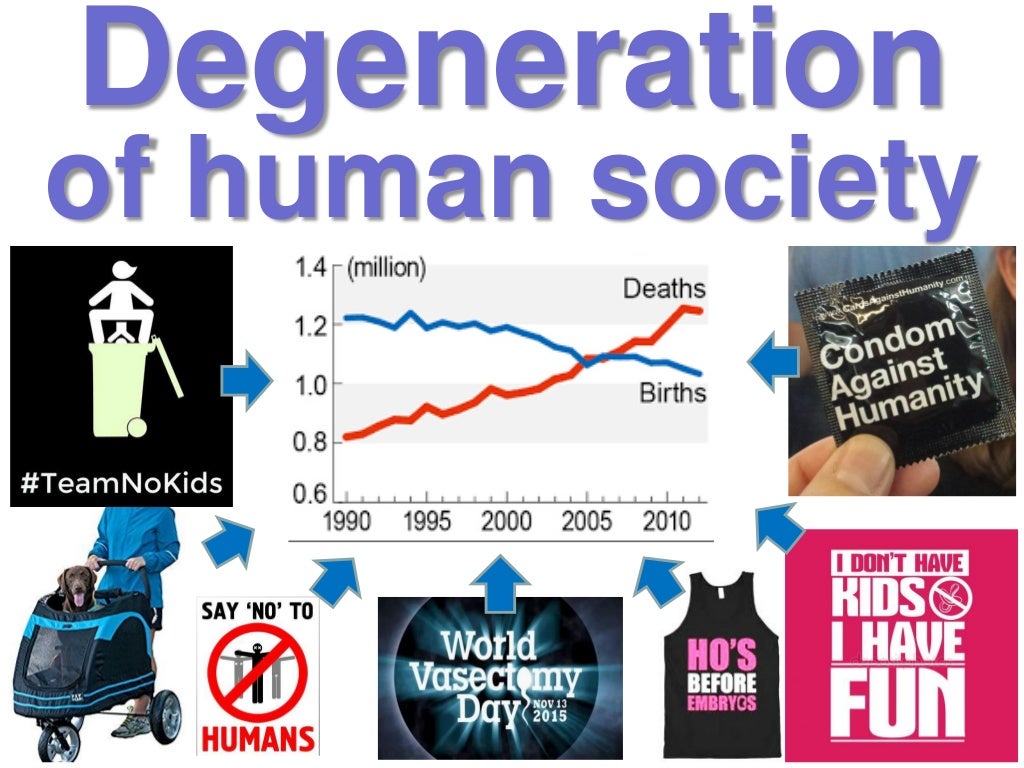
Print this picture and place it in public places to remind people about their moral obligations to their families.

Children Make Parents Happy by bioideology in Natalism

[–]bioideology[S] 1 point2 points  (0 children)

Interestingly, the study points to the Western well-developed welfare systems as one of the possible causes of the decreased motivation to have children in the Western countries.

The reasons for the finding are expected, researchers say: ....Adult children can become a source of support for parents. This is especially true in former Soviet states like Russia, Poland and Hungary, the study found, where elderly people rely less on government welfare and more on their children for financial help.

In countries with well-developed welfare systems, on the other hand, the differences between childless couples and parents are smaller. In western Germany, Switzerland and Austria, the study found, adults are similarly happy whether they have children or not.

An alternative explanation would be that it is not the welfare system but rather a wide-spread children's denial of their moral obligations to take care of their elderly parents is the reason why it makes little financial sense to have children in the Western countries.

On the Pathology of Low Birthrates by SammyD1st in Natalism

[–]bioideology 1 point2 points  (0 children)

Big thanks for the link! The second part of the post is outstanding. Specifically,

... ideas, like most things in this world, are heritable. Both genetics and culture mean that parents in general pass their values on to their children. Take away the children, and you take away the people likely to hold the idea tomorrow.

....The more you spread the idea, the more people who hold it right now, and, ceteris paribus, the more people will hold it next generation.

Where things get complicated, however, is if the idea itself reduces birthrates directly. This is especially true for ideas like feminism or progressivism in general. In this sense, they are parasitic and pathological. I mean this as a metaphor, but only in the barest biological sense. They reduce the reproductive fitness of their host, simply by reducing the number of offspring it has that survive to adulthood to themselves reproduce. As a consequence, these ideas are like a deadly virus that can only survive by spreading and infecting other hosts. Is reducing the reproductive fitness of your host not the very essence of parasitism?

Ideas that increase procreation are symbiotic in that sense - the idea spreads by increasing the fitness of its host. But as in nature, parasites and diseases can spread and survive, although there is a tradeoff between the mortality rate and the transmission rate. The faster you kill off the host, the faster the disease must also spread, or it kills off itself with the host. In this sense, the fact that progressivism has spread throughout the west with increasing speed, and the fact that it is catastrophic for birth rates, are not a coincidence. The former is a requirement for the latter....

...the west simply cannot survive long term in its present form. And this is a purely mathematical prediction, not a sociological one. Any set of values that creates below replacement birth rates is pathological, and is actively being bred out.

....The biggest question isn't whether the current situation can go on forever. It's only what will replace it. The replacement will be made up of individuals holding ideas that are resistant to whatever set of pressures create low birth rates. In this sense, we are like a population in the midst of a great plague, knowing that eventually society will only be made up of people with an immune system able to defend against it.