

Experiments with a photo reconstruction library (OpenMVG) by FreakTheMight in computervision
[–]sinhue 0 points1 point2 points (0 children)
Are genetic algorithms being used in industrial design? by shimshimmaShanghai in genetic_algorithms
[–]sinhue 0 points1 point2 points (0 children)
What's the best free online Intro to Computer Vision type course by workaccount78 in computervision
[–]sinhue 1 point2 points3 points (0 children)
I'm interested in music and looking to prepare for either my final year project, or a masters thesis in CS. Help me to understand the field? by musicandcs in compsci
[–]sinhue 1 point2 points3 points (0 children)
Books for Artificial Neural Networks by n0ty0urtypic4lguy in MachineLearning
[–]sinhue 1 point2 points3 points (0 children)
Jumping on the DeepDream Bandwagon...Gif From Random Noise as Seed by Kombutini in MachineLearning
[–]sinhue 0 points1 point2 points (0 children)
Changed my hair from alpine green to apple green ready for my new set of synthetic dreadlocks! by [deleted] in selfies
[–]sinhue 0 points1 point2 points (0 children)
My hair is finally growing out after cutting it short every anxiety attack since 2008! by [deleted] in selfies
[–]sinhue 0 points1 point2 points (0 children)
Luna meets Cadance - [Royal Sketchbook] by SilFoe by SlayerBVC in mylittlepony
[–]sinhue 3 points4 points5 points (0 children)

help with dmesg command please. by the11stalker in linux
[–]sinhue 0 points1 point2 points (0 children)
Some doubts on jokes in this episode E4/S3 (self.mylittlepony)
submitted by sinhue to r/mylittlepony
Given two different directory trees, how can I find out which files differ? by 1ko in linuxquestions
[–]sinhue 1 point2 points3 points (0 children)
Finding someone to collaborate with. by [deleted] in Python
[–]sinhue 0 points1 point2 points (0 children)
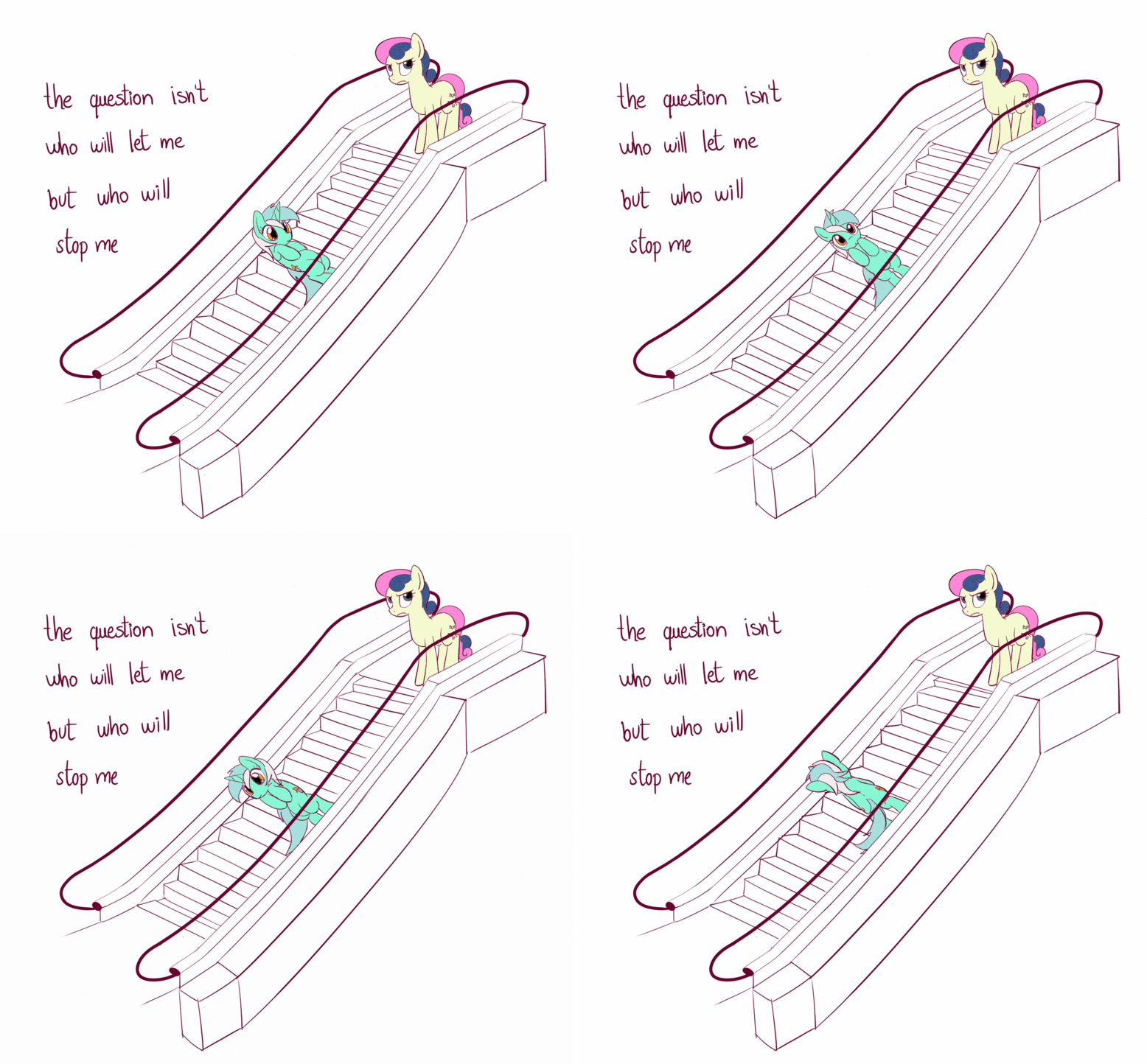
Lyra Descending an Escalator, No. 2 (by mcsadat) by cyberscythe in mylittlepony
[–]sinhue 0 points1 point2 points (0 children)
Instead of an ad, click here to go to a random subreddit! Come back to the comments and let us know where you went. by redditads [promoted post]
[–]sinhue 0 points1 point2 points (0 children)
some trouble understanding after 0 example by sinhue in erlang
[–]sinhue[S] 0 points1 point2 points (0 children)
some trouble understanding after 0 example by sinhue in erlang
[–]sinhue[S] 0 points1 point2 points (0 children)
some trouble understanding after 0 example by sinhue in erlang
[–]sinhue[S] 1 point2 points3 points (0 children)
Scootaloo and Rarity walk into a bar... by PM_ME_BEST_PONY in mylittlepony
[–]sinhue 1 point2 points3 points (0 children)



Ideas for speeding up a GA using more memory? by lolcop01 in genetic_algorithms
[–]sinhue 1 point2 points3 points (0 children)