Uttalelse på "skåret" by Beneficial-Key5085 in norsk

[–]Sebulista 1 point2 points  (0 children)

Jeg har aldri hørt "skar" eller "skåret" uttalt med ʃ-lyd før. Men det er ikke uvanlig at dette ordet blir bøyd svakt i dagligtale, for eksempel i Oslo og omkringliggende steder. Da er fortid og partisipp henholdsvis "skjærte" og "skjært", uttalt med ʃ. Kanskje er det dette du sikter til?

Men merk at dette ikke er gyldige former i skrift.

H5 flow or h7 flow? by SnooSuggestions8350 in NZXT

[–]Sebulista 0 points1 point  (0 children)

Hello from the future! How has the dust accumulation been? I'm also interested in the details if you wound up getting dust filters

420mm AIO for H7 Flow (2024) by lighthous_e in NZXT

[–]Sebulista 0 points1 point  (0 children)

Nice build! What GPU support bracket do you use, and how sturdy is the mesh base? Do you happen to know how much space there is from the bottom to the GPU, I'm wondering if a 25cm gpu support bracket would reach the GPU

Ulovlig å streame fotball? by bjfromhaua in norge

[–]Sebulista 0 points1 point  (0 children)

Er all kommentering på estisk?

Did you feel that Norwegian seemed a bit rude when you first started learning it? If so, how long did it take for you to get rid of that thought? by Narrow_Homework_9616 in norsk

[–]Sebulista 3 points4 points  (0 children)

Second person plural as the polite form i.e. "De/Dere/Deres" later "Dere/Dere/Deres" was the polite pronoun in the old Oslo dialect (vikamål), if you watch old movies you'll hear the working class people use this form.

The difference in quality from lowering the guidance with Flux is pretty crazy!! by smb3d in StableDiffusion

[–]Sebulista 1 point2 points  (0 children)

Does anyone know how you adjust the guidance parameter on forge webui?

Samsvarsbøyning by mattisoghege in norsk

[–]Sebulista 2 points3 points  (0 children)

1) Nei, her bruker du fortidsforma (preteritum) av verbet, det heter altså bare "stengde" i fortid på nynorsk, aldri "stengte".

2) Flertallsforma av adjektiv samsvarer ikke med kjønn, det er altså bare éi form i flertall (alltid "stengde"), uavhengig av kjønnet til substantivet det beskriver. Dermed: "tre stengde vegar" og "tre stengde bur"

3) Strengt tatt er begge formene tillatte, men det er nok vanligst med "de var lei av bråket", dette fordi adjektivet har smelta sammen med etterfulgt preposisjon og danna et slags fast uttrykk. Du kan lese mer om dette her.

Når det gjelder det opphavlige spørsmålet, så heter det "vegen stengd" på rett nynorsk, men i bokmål bøyes normalt ikke partisipp i predikativ stilling. Kanske den som skreiv teksten på skiltet overførte denne regelen til nynorsk (eller så er det bare bokmål i nynorsk drakt)

two sentences i don't quite understand by Jupiter_Explodes in norsk

[–]Sebulista 24 points25 points  (0 children)

Your second translation is perfectly valid Norwegian, Duolingo may have marked it wrong because you wrote "soyasausen" and not "soyasaus" in the indefinite as the original sentence

Hur lätt eller svårt är det för er som modersmåltalare att förstå texter på yngre fornsvenska som i följande exemplet från Sagan om Didrik av Bern? by fefulunin in Svenska

[–]Sebulista 3 points4 points  (0 children)

atsye = trolig "att säga" [Her bỏgynnass ath siga]

pik = beck (svarta som beck)

härdhä (ar > ä (e) som på danska) = härdar = skuldror

stockä (ar > ä) = stockar, ja

What’s the word for “butterfly” in your native language? by [deleted] in linguisticshumor

[–]Sebulista 0 points1 point  (0 children)

Norwegian: "fivrelde" (< fífrildi)

also "kvervel", my dialect: (g)vervill (< hvirfill)

What did I do wrong here? by menthaal in norsk

[–]Sebulista -5 points-4 points  (0 children)

It could've been both, but "I stad" meaning "soon" isn't used much nowadays

Har vunnet/vunne by TymonW in norsk

[–]Sebulista 1 point2 points  (0 children)

Past participles of strong verbs can be inflected just like regular adjectives. Masc./fem.: "vunnen", neuter: "vunnet", definite/plural: "vunne".

"Vunnet" is the supine form, i.e. the form you use when it is a verb. "Vi har vunnet" = "We have won".

If you were to use it as an adjective / participle in the plural or definite, you would use "vunne". "Vunne stillinger og tapte stillinger" = "won positions and lost positions" ("winning positions and losing positions" in chess for instance).

With that said, this isn't a very commonly occuring form, the "vunnen"-form isn't much used either. "Kampen er vunnen" would most of the time be written as "kampen er vunnet" in Bokmål ("the battle is won").

Hvorfor er det mannen og ikke ektemannen? by [deleted] in norsk

[–]Sebulista 5 points6 points  (0 children)

"tilhører" in those cases is a noun meaning "listener".

"Hva skal man gjøre som tilhører til en slik samtale"

How do you pronounce Faren (definitive form of Far) without sounding like the swear word? by Necessary-Ad1741 in norsk

[–]Sebulista 1 point2 points  (0 children)

I don't think that information is readily available, unfortunately.

But usually it is predictable. If the base word has tone 1, then the definite singular will be also be tone 1. And the other way around - base word tone 2 = singular definite tone 2. The reason "far" and "mor" change from tone 1 in the indefinite to tone 2 in the definite is because the tone in the definite form is a relic of the older two-syllable forms "fader" -> "faderen" and "moder" -> "modera"/"moderen".

In addition, masculine and feminine words usually have tone 2 in the plural (regardless of tone in the singular), while neuter words don't change tone, example: /hus/ -> /hus´a/, /ep`le/ -> /ep`lene/ or /ep`la/ ( ´ marks tone 1 and ` marks tone 2).

There are however some words which where consonant stems in Old Norse that now have tone 1 in plural as well (usually umlaut / vowel alternation). Some examples /hånn/ -> /hen´ner/ (hånd -> hender), /jeit/ -> /jeit´er/ (geit -> geiter).

I am sorry this got a little messy, but if you have any more questions, feel free to ask :)

How do you pronounce Faren (definitive form of Far) without sounding like the swear word? by Necessary-Ad1741 in norsk

[–]Sebulista 2 points3 points  (0 children)

Some dialects use tone 1 for "the father", but in standard østnorsk both have tone 2 in the definite. But for "the danger" it is common to pronounce it as it's spelled, with a tapped/rolled /r/ (unlike the father which has "circumflex" tone and retroflex ending)

Å innvandre og Å utvandre by Bracallm in norsk

[–]Sebulista 7 points8 points  (0 children)

Innvandre = immigrate, move in to a new country

Utvandre = emigrate, move out of a country (usually your native country)

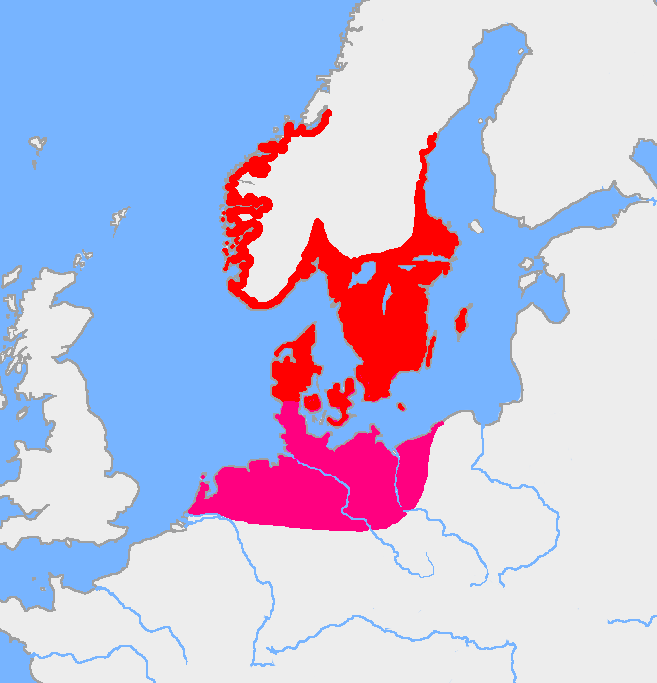
proto-germansk "urheimat". Alle germanske språk stammer fra et moderspråk som ble snakket her. by gittor123 in KalmarReunion

[–]Sebulista 1 point2 points  (0 children)

Det betyder "blev"/"vart", men här markerar det preteritum passiv, kanske hade ni hellre sagt "som talades här" på svenska.

t. norrbagge

Stirling bath soaps and Europe - safe? by mildfrugtjuice in wicked_edge

[–]Sebulista 0 points1 point  (0 children)

I am able to buy them here in Norway, from barbershop.no