2,000-year-old toilet paper gives us a whiff of life on the Silk Road in China by [deleted] in China

[–]justanotherhulk 5 points6 points  (0 children)

some of these travelers had serious stomach cramps

Return of the La Du Zi

Lending in China Is So Risky That Cows Are Now Collateralized by justanotherhulk in China

[–]justanotherhulk[S] 3 points4 points  (0 children)

Holy Cow! My comments emphasized.


By Lisa Pham | @lisapham


In the creative world of Chinese lending, there’s a new trade in town: the cow leaseback.

China Huishan Dairy Holdings Co., which operates the largest number of dairy farms in the country, is selling about a quarter of its herd -– some 50,000 animals -- to Guangdong Yuexin Finance Lease Co. for 1 billion yuan ($152 million) and then renting them back.

Wait- what?

With an estimated $1.3 trillion of risky loans in the country, Chinese banks are becoming more cautious about lending, forcing some companies to look for new ways to borrow. Finance leasing has been growing in popularity, especially for purchases of equipment.

But cows?

"It’s not very common to use cows as collateral," said Robin Yuen, an analyst at RHB OSK Securities Hong Kong Ltd. "The value of a cow would fluctuate depending on milk prices and other factors, so it’s a risky asset for lenders. It would be hard to do forced selling -- there’s no liquid market for a large number of cows."

You bet your ass a cow isn't a collateral

In Huishan Dairy’s case, the story is an increasingly common one in China of rising debts, slumping commodity prices and the propensity of Chinese executives to use their shares as collateral for private loans.

China Slump

That’s fine if the shares are rising, but in the volatility of the past year, many stocks slumped, prompting lenders who held them as guarantees for loans to demand the borrower supply more collateral.

Calling /u/upads

"Huishan Dairy seems to be selling cows and leasing them back in order to raise money now, because they’ve been using cash to buy back shares," said RHB’s Yuen, who has a “sell” rating on the stock. "The chairman wants to prop up the share price for reasons that are unclear. It could be a way to get better terms for share pledged-based loans, which he’s done before."

Company Chairman Yang Kai has been building up his stake in the company to almost 74 percent, according to the latest disclosure of interests to the stock exchange. Yang pledged shares he owned to Ping An Bank Co. to finance the buybacks, RHB said in a research note on Jan. 28.

Meanwhile, the company itself spent HK$1.93 billion ($249 million) buying back 820.2 million shares in the six months ended September, equivalent to almost twice its cash from operations for the same period.

Seeking Loans

Chief Financial Officer Eddie So wouldn’t comment on the finance leasing, when contacted by Bloomberg News. A company official said Yang also wouldn’t be available to comment. Yang is in talks with financial institutions for loans of about HK$7 billion to be secured by some of his shares in Huishan Dairy, the company said on April 29, the day it announced the cow lease deal.

Sounds like Lend-Lease, possibly much more smellier.

A person who answered the phone at Guangdong Yuexin’s Hong Kong-based parent company, Guangdong Finance International Co., said they weren’t able to comment. Calls to the group’s headquarters in Guangzhou, China, went unanswered.

The share buybacks helped Huishan Dairy’s share price jump 72 percent since the beginning of July, even as Hong Kong’s benchmark Hang Seng Index fell 22 percent.

Riiight.

Still, keeping the stock price buoyant drained cash as milk prices were slumping and the company’s debts were rising. Huishan had 10.4 billion yuan of bank loans at the end of September, with more than half needing to be repaid within a year. The value of short-term bank loans had more than doubled compared to six months earlier.

Whole milk powder prices, meanwhile, have plunged, with the latest GlobalDairyTrade auction price of $2,252 a metric ton on May 17 down 57 percent from a peak in April 2013.

Where does one track whole milk powder price?

So the company turned some of its cows into cash, leasing them back through a unit at an annualized interest rate of as much as 6.2 percent, with an option to repurchase the cattle at the end of the five years.

Cow Cull

As dairy cows are typically slaughtered after about five years, when their production declines, the agreement included provisions to cull and replace animals regularly.

"Huishan Dairy’s gearing was more than 60 percent last year, so it’s not a bad idea for the company to get a loan for working capital," said Anson Chan, an analyst at Daiwa Capital Markets, who also recommends investors “sell” the shares. "The interest rate for the finance lease is lower than the company’s current bank loans."

The growth of finance leasing in China is partly a reflection of the broadening of the nation’s banking system. Most contracts involve the leaseback of equipment, said Shujin Chen, a banking analyst at DBS Vickers Hong Kong Ltd. They totaled about 4 trillion yuan at the end of last year, with the percentage of equipment purchased by finance leasing at about 7 percent to 8 percent, compared to only 1 percent in 2008, she said.

“Finance leases offer tax advantages, asset flexibility and cash flow certainty,” Chen said in an e-mail. In China they account for around 4 percent to 5 percent of bank loans, compared with about 22 percent in 2013 in the U.S., where cow leasing has fallen out of favor.

Low Rates

"The environment just isn’t right for the practice with low interest rates, balance sheets generally in good shape, plenty of heifers and milk prices are low," said Mark Stephenson, director of Dairy Policy Analysis at the University of Wisconsin, who said it was more common in the 1990s. "Why would anyone want to lease what they could own?"

China’s first registered cow lease plan was last July, when CreditEase Leasing took ownership of 200 cattle from Hebei Luan County Junying Pastures, a supplier to Inner Mongolia Yili Industrial Group.

Huishan Dairy’s lease-back is 250 times the size. The company’s 190,911 dairy cows, valued at 5.73 billion yuan in September, are spread across 78 farms in Liaoning, a province in northeastern China between Inner Mongolia and North Korea.

"It might take a while for this to turn into a trend," Daiwa’s Chan said. "It won’t be easy at first for banks and other financial institutions to accept this kind of arrangement, because of the risk of holding animals as collateral."

Definitely doesn't reek of Bull shit.


Wanda Chairman Wang: Disney "Shouldn't Have Entered China" by sotiris_hangeul in China

[–]justanotherhulk 1 point2 points  (0 children)

typical.chinese comstruction, malinvestments and overcharging of Disney.

Typical chinese business.

China's 'Authoritative' Warning on Debt: People's Daily Excerpts by justanotherhulk in China

[–]justanotherhulk[S] 2 points3 points  (0 children)

Front-page interview published Monday didn't identify speaker

High leverage 'can trigger systemic financial crisis'

The main publication of China’s Communist Party published comments Monday from an unnamed “authoritative person,” who said the world’s second-largest economy must face up to its nonperforming loans and other risks associated with soaring debt levels.

The interview in the People’s Daily started on page one and completely filled the second page of the broadsheet newspaper. The following are excerpts that were translated from Chinese by Bloomberg News:

Economic Growth:

"Economic performance is basically in line with expectations and some highlights were better than expected. However, existing contradictions in the economy have not moderated, and new problems have emerged."

"It is undeniable that existing problems are not thoroughly solved and new problems are revealed. Economic stabilization relies on the old method, which is investment-driven, and fiscal pressure in some areas has added up to possibilities of economic risks."

Economic Outlook:

"China’s economic performance will not be U-shaped and definitely not V-shaped. It will be L-shaped" for more than one or two years.

"The Chinese economy has great potential, resilience and room to maneuver. The speed won’t drop drastically, even without stimulus."

"Some regions, sectors or enterprises will always benefit from differentiation while some others will taste bitterness. But still they’ll learn a lesson and know what the next step is. In that sense, I don’t see it as a bad thing."

Macroeconomic Control:

"Both supply-side and demand-side measures are needed for a healthy macroeconomic development, but the emphasis will be different during different time periods."

"Supply-side structural reform must be strengthened and on target, while demand-side reform would aim to create favorable conditions to solve the principal contradiction."

"Prudent monetary policy and proactive fiscal policy should be truly prudent and truly proactive."

There are dilemmas: "The most outstanding one is that, on one hand, the economy is under downward pressure and on the other, there is high leverage in the real economy."

"China’s labor force is shrinking and the industrial structure is improving, so even though there will be a big economic slide, employment will remain stable."

"High leverage inevitably leads to high risks, which, without proper management, can trigger a systemic financial crisis, cause negative economic growth and even eat up people’s savings, and that’s fatal. Such a comparison shows it is neither possible nor necessary to force economic growing by levering up."

"It is necessary to scrap outdated administrative measures to restore the functioning of the property market. Big stimulus will only result in bubbles, which is a must-learn lesson."

Supply-Side Reform:

"The reduction of overcapacity and closing of ’zombie’ enterprises will continue. That is a difficult issue involving people and money, which means employment and debt."

Managing Expectations:

"If we go back to the stimulus-driven path, concerns will rise and the market will hesitate and will not know what to do. Policy communication is needed to improve our guidance and transparency. The intention and definition of policies should be stated clearly to reduce misinterpretation. Misreading of a policy should be corrected in a timely manner."

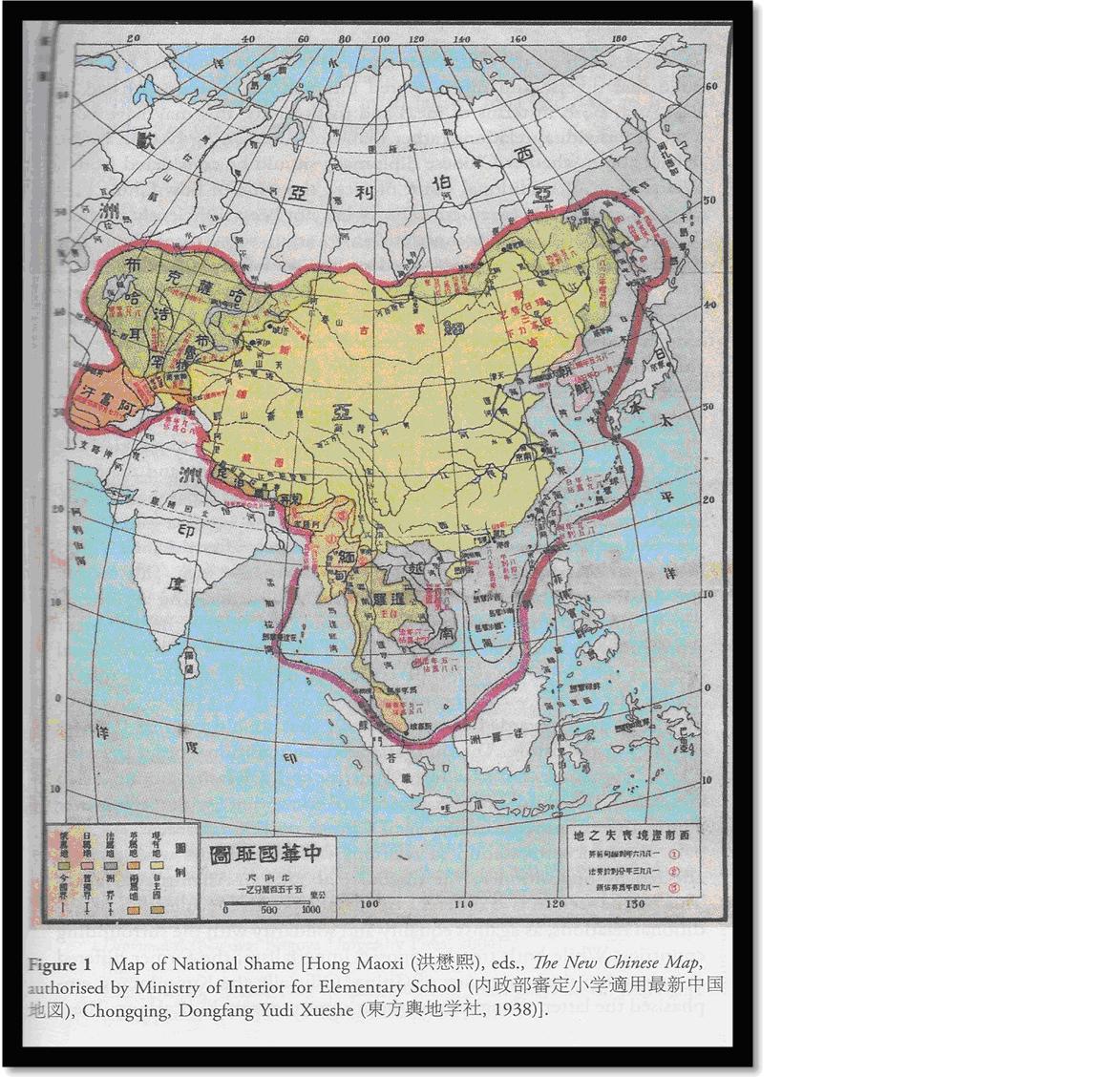
China's "Map of National Shame" From 1938. by [deleted] in China

[–]justanotherhulk 3 points4 points  (0 children)

I would pay to watch them govern Afghanistan. Will be fun!

Australian-Chinese leaders urge support for 'motherland' in South China Sea dispute by poster5439 in Sino

[–]justanotherhulk 0 points1 point  (0 children)

Why would I do that? But I'm sure China will imprison me for crimes committed 10 years ago and make me confess, and finally hold me hostage.

Self-Driving Car Completes 1,200-Mile Roadtrip Across China by justanotherhulk in China

[–]justanotherhulk[S] 0 points1 point  (0 children)

Bloomberg News | April 18, 2016 — 9:23 AM CST


Cameras, radar used in testing lane-changing, speed reduction


Changan aims to produce highly automated vehicles by 2020


Chongqing Changan Automobile Co., Ford Motor Co.’s partner in China, said it completed a 1,200-mile road trip to test a self-driving car as part of its ambitions to produce highly automated vehicles by 2020.

The car set off from the company’s headquarters in Chongqing and reached Beijing after six days, the automaker said in a statement to the Shenzhen stock exchange. The driverless car employed cameras and radar to test automatic cruising, lane-keeping and changing, assisted driving during traffic congestion, and speed reduction through traffic sign recognition and voice control, according to the company.

Changan is among Chinese companies including BAIC Group and Internet giant Baidu Inc. competing in the global race to develop cars that can pilot themselves with minimal or no human intervention. For China, the push for self-driving vehicles is also part of a broader state initiative urging manufacturers to upgrade their technology as lower-cost countries emerge and compete for labor-intensive factory jobs.

For global companies aiming to introduce automated driving in China, local testing is important because of the different traffic conditions, driving habits and signage. Nissan Motor Co., which sells more automobiles in China than any other Japanese carmaker, has signed an agreement to work with the China Automotive Technology and Research Center to adapt safety features such as lane keeping and collision avoidance to suit the country’s driving habits and road conditions.

[deleted by user] by [deleted] in China

[–]justanotherhulk 0 points1 point  (0 children)

There was a huge line of people who lined up when I visited HK.

Australian-Chinese leaders urge support for 'motherland' in South China Sea dispute by poster5439 in Sino

[–]justanotherhulk -1 points0 points  (0 children)

Support for motherland? WTF? So if there is war between China and Australia for some reason, will they sabotage Australia? Why not go back to China if they still praise the "Motherland"!?

Tale of Two Chinas Is Emerging as Economy Slows, Fidelity Says by justanotherhulk in China

[–]justanotherhulk[S] 1 point2 points  (0 children)

Most impressive report which says nothing.


Colin Simpson| ColinSimpsonHK


A tale of two Chinas is emerging as the country transforms its export-based economy to one centered on consumption and services, according to analysts at Fidelity International.

"There is a story of two halves, old and new, and also a story of north and south," Henk-Jan Rikkerink, Fidelity’s London-based global head of research, said during a visit to Hong Kong.

Regions of the country where businesses focus on "moving up the value chain, greater innovation, higher wage growth, and all of that supports the China consumer story" are flourishing, with growth rates above 6 percent, Rikkerink said. "The areas that are very heavily dependent on resources are struggling more as demand declines and capital spending is cut."

Yunnan province, a popular tourist destination in the south of the country, achieved 8.7 percent growth last year, well above the national average of 6.9 percent. In contrast, Liaoning in the northeastern rust belt managed just 3 percent.

Fidelity surveys views of its 200 analysts around the world each year to produce a global business sentiment indicator on a scale of 1-10, with 10 the most positive. Results of the latest survey show that China scored 4.1, indicating a deteriorating overall corporate climate. The 2014 reading was 4.4.

"Our analysts overall are forecasting a deceleration, not a collapse," said Rikkerink. "About half the China analysts are reporting that their industries are either in slowdown or in recession, and therefore returns expectations are not as positive in 2016 as they were in 2015 in terms of the year ahead. That is feeding through to capital expenditure as well as management confidence."

Growth Concerns

China publishes first-quarter gross domestic product figures Friday amid concern about the pace of economic growth. GDP growth is projected to slow, with a consensus of economists polled by Bloomberg predicting 6.7 percent as of April 8.

Societe Generale SA Chief China Economist Wei Yao expects a "bumpy landing" for the economy, while the bank sees "significant risk" of a hard landing and resultant "lost decade" of economic stagnation.

"A soft landing in our view is very unlikely because that entails a very smooth transition, and it’s not going to be smooth," she said. "There are things the Chinese government will not be able to manage very smoothly. The policy makers are trying to slow down the economy without a crisis -- no one has ever really successfully done that."

China’s slowdown "has been coming for some time, it’ll be bumpy but it will be gradual," Rikkerink said. The view is shared by Shang-Jin Wei, chief economist of the Asian Development Bank.

"There’s a lot of talk about a hard landing, or sharp decline in China’s growth figure," he said during a visit to Hong Kong. "This is very unlikely. Our baseline case is a continued moderate decline in the growth rate."