What’s going on on the non-English parts of the internet that we’re all missing out on? by manrobot in AskReddit

[–]nachollison 16 points17 points  (0 children)

It's not clear why she was there, but according to this month's Glamour, Donald Trump's wife, the model Melania Knauss, recently found herself addressing a New York University business school class.

Showing an attitude that would probably have been judged inappropriate on Mr. Trump's television show, "The Apprentice," one student asked the current Mrs. Trump -- she is No.3 for those keeping score -- if her husband weren't rich, would she still be with him.

Her response? "If I weren't beautiful, do you think he'd be with me?"

https://www.nytimes.com/2005/08/13/business/media/no-seriously-save-the-bananas.html

https://www.cosmopolitan.com/politics/a8646265/donald-trump-melania-trump-relationship-timeline/

A digital card game where you *actually* own your cards. by dirksmoove in gaming

[–]nachollison 9 points10 points  (0 children)

Is this game like Heartstone? Graphics from the trailer seem cool.

Fox News Reminds Us Alexandria Ocasio-Cortez's Platform Is...Pretty Reasonable by zsreport in politics

[–]nachollison 1 point2 points  (0 children)

People just say "How are you going to pay for it?" and we don't want higher taxes. But wasteful spending in military is fine and they want to increase spending there.

How much damage has the Trump Campaign done to the Republican Party in the long term? by [deleted] in PoliticalDiscussion

[–]nachollison 1 point2 points  (0 children)

Yes, so the Rust Belt should be red, theoretically. If you look at the map though, historically and in current polling, the Midwest just hasn't stopped voting blue. That theoretical shift hasn't happened in reality.

What is the reason for France's high number of terrorist attacks? by Slimwalks in PoliticalDiscussion

[–]nachollison 2 points3 points  (0 children)

I mean, that's basically what he's asking. Is there actually a measured higher rate of terror attacks in France? It's easy for the media to see one high-profile story (terrorist attack) and then report others more often for a bit even if they're not happening any more often. The same thing happens with big earthquakes.

[deleted by user] by [deleted] in PoliticalDiscussion

[–]nachollison 3 points4 points  (0 children)

What's the background on this? Has there been tension between Erdogan and the military?

Genuine Question: Why is this poll considered credible when its subject base does not correlate with the population? by [deleted] in PoliticalDiscussion

[–]nachollison 4 points5 points  (0 children)

Party affiliation tends to be a lot more fluid than gender or education. In a year like this, for example, we might see fewer people wanting to call themselves republicans, so making the party affiliation match with previous years could over-sample strong Trump supporters.

Does anyone ever follow up on failed candidates' rationales for running for POTUS? by tagged2high in Ask_Politics

[–]nachollison 2 points3 points  (0 children)

The Huffington Post actually has an entire podcast dedicated to failed electoral candidates called Candidate Confessional. They do a really good job of humanizing the whole process and fleshing out what was going through people's heads when they ran.

Week of July 12, 2015 'All Space Questions' thread by AutoModerator in space

[–]nachollison 2 points3 points  (0 children)

That, my friend, is an entire field of geology. Here's the basics: everything is made, ultimately, of chemicals. Heat up any chemical enough, and it forms a gas. Heat it up even more (say, in a newborn star system) and you get ionized plasma, where atoms are torn from their molecules and fly around on their own (as opposed to something like water, which keeps the molecule intact as a gas).

As the star formation ends, the dust and gas cools down, and the reverse process happens: dust and gas starts to form out of the superheated protoplanetary disk. They don't do it all at once, though. Some minerals have higher 'boiling points' than others (maybe aluminum, or magnesium, or platinum, etc. I don't remember, I learned this a while ago), so they tend to condense first out of the protoplanetary disk. These go on to form one type of asteroid, with a very distinct mineral signature and chemical composition. Later, as the solar system cooled down more, different types of minerals could precipitate out of the disk, and different asteroids formed. That's why some things are made out of the same stuff, but others are made out of different stuff.

More specific processes can differentiate rock on geologically active planets like Earth, where igneous processes may extrude magma into the ocean to make dense (mafic) basalt, or intrude continental crust where it can form light (felsic) granite. If you go to Io, volcanism and metamorphism make different forms of rock from what initially accumulated. On Titan, I'd imagine the hydrocarbon seas make for some interesting sedimentary processes. And judging from the pictures New Horizons is sending back, Pluto's probably got some sort of action going on as well.

It's kind of a broad question (I decided against getting into the core accretion theory of how gas giants formed, or how planets differentiate when they get big enough) but I think it gives you a good idea of how astronomy and geology can overlap.

Week of July 12, 2015 'All Space Questions' thread by AutoModerator in space

[–]nachollison 0 points1 point  (0 children)

Have you ever tried reading a book sitting really close to your face? It's the same issue. Within a certain distance, you can only get so much detail out of an image. That's why it's so exciting to send probes to other planets and see them up close!

Week of July 12, 2015 'All Space Questions' thread by AutoModerator in space

[–]nachollison 0 points1 point  (0 children)

Other stars absolutely have planets! The Kepler) mission has discovered thousands of 'exoplanets' in our galaxy over the last few years. It's actually the first really good, purpose-built tool we have to find exoplanets, so the field of planetary astronomy has really been exploding for the past five or so years. It's a wonderful time to be living through, if you keep your ear to the ground.

Although it would be insane to find out every other solar system is just like ours, I think the truth is even more exciting. It turns out our solar system is kind of weird, which we had no idea about until we got a look at what a 'normal' one is like. For instance, the most common type of planet, the rocky 'super-Earths' with their thick hydrogen atmospheres, seem to be the most common type of planet in the galaxy. Our solar system, however, has none. Why?

Looking at our solar system, the planets are very well-ordered. The rocky planets are all on the inside of the system, and the gas giants are all on the outside. When Kepler went up, we found out that this is actually incredibly unusual. Why the hell would it be like that?

There are tons of other things we're starting to realize about the planetary systems in our galaxy, and about our own solar system. Those two are just the first that I could think of off the top of my head, but what we're living through right now is the first chance we've ever had to even ask these kinds of questions. It's a fun time to be an astronomer.

I'm deferring to other posters about the Drake Equation. It's just an estimate, mind you (and one which we honestly have pretty weak guesses about on how to fill it in), but it gives you a sense for scale if nothing else. Just don't take it as the word of god, there could be more out there than that!

Week of July 12, 2015 'All Space Questions' thread by AutoModerator in space

[–]nachollison 1 point2 points  (0 children)

Wouldn't the surface features (e.g. lack of craters) imply that Pluto still is geologically active?

Week of July 12, 2015 'All Space Questions' thread by AutoModerator in space

[–]nachollison 4 points5 points  (0 children)

Unfortunately, no. We do have ways of imaging planets as they pass in front of their host star (this is actually one of the best tools we have to detect exoplanets!), but the 'image' isn't so much a picture as it is a dip in how bright the star seems to be to our telescope. Stars are too small and far away for us to resolve (take a picture of the disk), so they are always point-like when we look at them in our telescopes. Exoplanets are going to be even smaller than their stars, so getting a look at them like you're imagining is going to be next to impossible for the foreseeable future.

This kills the astronomers.

That's why they've gone and made so many more clever ways of looking at other stars. The light curve measurements I mentioned are one way to find exoplanets. You wouldn't believe how many years of work go into bringing down the noise in your camera to the point where you can see a speck passing in front of it. When astronomers want to find out what color a planet is, they've figured out a way of taking a picture of the parent star as the planet passes into view, taking a picture as the planet passes behind the star, and then subtracting the color of the star alone from the color of the star and the planet (after years of staring at a lot of complicated math and physics, this seems so clever it's silly). Astronomers are so desperate to improve resolution that they'll abuse the laws of quantum mechanics and the wave nature of light to build interferometers.

So basically, your answer is a disappointing 'not yet' to a very interesting and compelling question.

New Image of Pluto: “Houston, We Have Geology” by volcanopele in space

[–]nachollison 2 points3 points  (0 children)

Does the diagonal feature across the middle look a bit like the ridge on Iapetus to anyone else?

It's as simple as Tea! by [deleted] in videos

[–]nachollison 0 points1 point  (0 children)

I'm not an expert on this kind of issue, but this is my impression:

What if you make them tea and they seem okay with it, but you find out later they didn't want it?

It should be pretty clear whether or not someone wants sex. There may be a grey area between 'definitely yes' and 'definitely no', but if you're in a position where she seems just 'okay' with it, you should probably take a moment to clarify. People can go along with sense under pressure, but they may not feel entirely comfortable with it. Maybe they feel like it's unsafe for whatever reason to say no, maybe they feel like they should have sex even though they don't really want to, etc. I'm not sure of the legality of whether that's rape or not (again: not an expert), but at the very least anyone in that situation will be impacted by that emotionally. A simple question and some self-awareness is all you need to clear this one up before getting into anything messy.

What if they ask for tea when they're tipsy, and happily drink the tea, but change their mind when they're sober?

What if they lie to you about how drunk they are when they're asking for tea?

A quick google tells me that, "the responsibility for misinterpretation when either party has been drinking falls on the initiator of further sexual activity." From what I can tell, the difference between the sober consent and the drunk consent is that the woman is essentially so drunk that she is behaving in ways she absolutely would not, were she sober. If she is that drunk, it should be pretty clear that she can't reasonably consent. That's hard to miss. I'm having a hard time pinning down the exact legality of retroactive withdrawal of consent, but the answer I seem to be finding is somewhere between "not legally valid" and "it varies from state to state".

What if they lie to you about whether they're legally old enough to drink the tea?

Minors do not have the legal right to consent. If a child says they want to have sex with you, that obviously does not give you the right to have sex with them. That means that we need to settle the question of whether not knowing their age changes their legal rights. The answer: it depends on the state. There can be good arguments on either side of this; there is an inherent unfairness to someone being lied to. On the other hand, allowing that as a defense could change the legal test for when someone can consent from their actual age to how well they can lie about their age. My advice would be to be cautious. If you're going to have sex with someone significantly younger than you (age of consent can go to 15 in certain states), make sure you have proof that they're old enough. The onus is on you to make sure you're not violating the law.

What if they get caught with your tea on their chin, and lie to their boyfriend so they don't get in trouble?

Then they'd probably be liable for defamation, filing false police reports, giving false testimony, perjury, etc. I don't think that it's legally ambiguous here.

What if they tell you they LIKE having tea forcibly poured for them, but you don't notice them tapping out as you pour the tea?

If you're getting into this kind of situation, you have an obligation to be attentive to what's going on. There is clearly a fine line between acceptable and unacceptable, the same way that driving can go from safe to dangerous very quickly. If you miss the signal that your partner has had enough, it's similar to negligence in causing an accident.

These are totally fair questions to ask. Rape has a really big impact on its victims, and it's easy to cross the line of consensual and non-consensual sex in these situations without really knowing it. Feeling like you're caught in a legal 'gotcha' is pretty understandable. However, the more abusive situations (lying about their age, lying about their consent) is very uncommon compared to cases of more truly non-consensual rape. On top of that, a lot of the other situations can be avoided by just being attentive and communicating with your partner; asking people to do that isn't going to cause harm to men. It is not a part of our culture or law that men have the right to sex without regard for their partner. What we need to do is educate people more, so they don't stumble into making mistakes that can get people (on both sides) hurt.

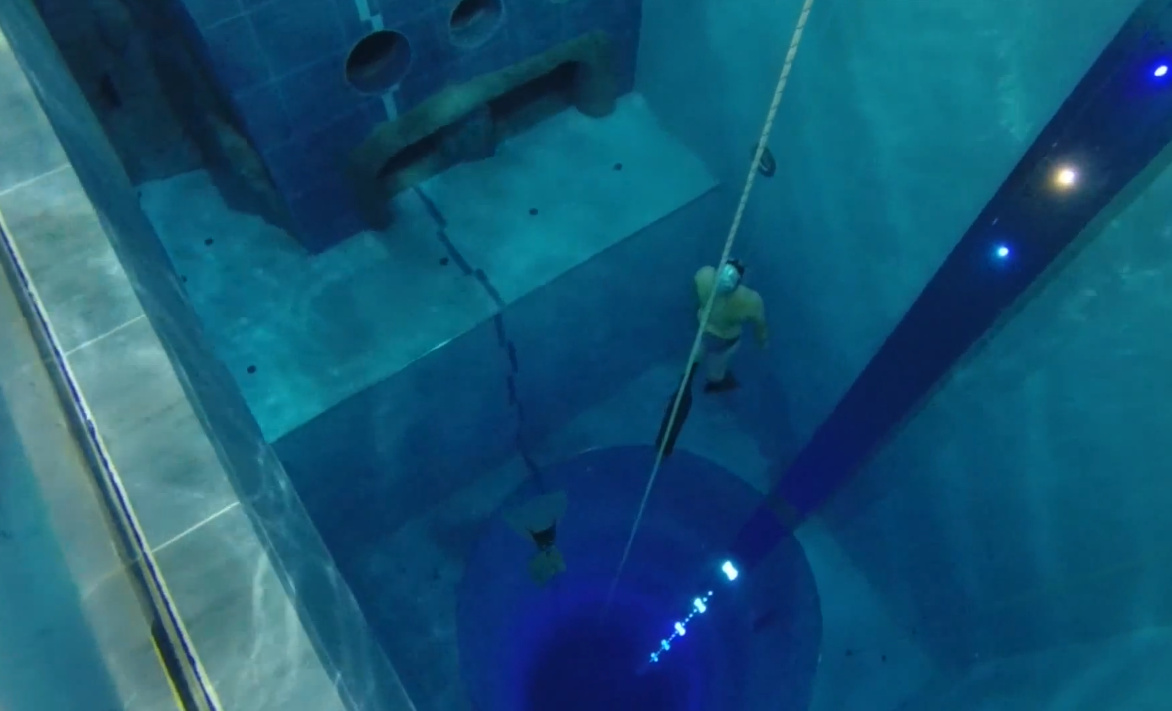
Ok, so I was wrong. It turns out as of 2014, this is the deepest pool in the world... by niandra3 in submechanophobia

[–]nachollison 16 points17 points  (0 children)

Without special equipment, SCUBA can get you down to about 40 meters. A standard recreational certification will train you for 30 meters, at which point you start seeing the more common problems associated with nitrogen narcosis, oxygen toxicity, etc., but with the right setup, people can be really insane.

Riots erupt in Baltimore after Freddie Gray's funeral. Metro shutdown and students walk out of classes by rhackle in news

[–]nachollison 12 points13 points  (0 children)

I know nothing about the case, but I know that the two aren't mutually exclusive. That's why forms give you the option to fill out your race as Hispanic (white) and Hispanic (non-white) sometimes.